The best landing page builders for the top 1 million websites in 2020

In 2020, we are aware of the fact that a landing page of a website is very important for the conversion funnel. A lot of us might have read multiple articles on creating an effective landing page. However, not everyone can have impressive results. The reason is, no matter how many A/B tests you do, creating a useful landing page is often more challenging than it seems to be.

When it comes to digital marketing, it is important to increase the number of leads and conversion. Generic homepages will not do any good anymore. An effective landing page is a very crucial weapon for generating leads and increasing conversions. The bad news is a landing page doesn’t build itself. The good news is, there are numerous landing page builders that will make things easy for you.

What is a landing page?

Simply speaking, a landing page can be any page that is created specifically for marketing or advertising in a digital marketing campaign. A landing page can be any page. It can be a homepage, a page within the website, or a standalone page that you created for a special event. This is the page where the visitor will “land” when they click on a link. It can be redirected from a social media page, a paid ad, YouTube, or any other medium.

Unlike the other website pages that have many goals, the landing page is focused on only one goal – the CTA (call to action). It is this focus that makes them the best option for increasing conversion rates of the marketing campaigns. Also, it helps in reducing the cost of acquiring a lead or a sale.

What is a landing page builder software?

Landing page builder software helps in creating an effective and easy landing page. It will increase conversions. There are a lot of templates from where you can choose your landing page. These landing page templates are tried and tested.

They are useful in converting visitors. A lot of landing page hosting services offer drag-and-drop features that will help you in customizing the landing pages to match up with your site. It includes a CTA, text, image, and color options that are customizable.

Why should you choose landing page templates?

Here are the reasons why you should use the landing page builders.

  1. The landing page builders are created with conversions in mind

While creating a landing page, the general tendency is to replicate an existing page or create a new page, add images, and copy the goal of another page. This might fulfill the requirement of a landing page for an advertising campaign, but this will not generate the results you want.

However, when you use a templated landing from a landing page builder, you start with a canvas that is designed for driving visitors to convert. Along with that, many of these platforms also come with testing tools for making your landing pages even more valuable for the site.

Thus, when you are using a platform like this, you will not only get a template that is conversion-focused but also the ability for customizing the template for your audience.

  1. The landing page templates are less costly than the custom designs

Creating a unique landing page for every ad campaign is expensive. This is especially true if you have to design completely new pages. However, the good news is, the ready-made pages will reduce the cost significantly.

Most of the landing page templates will help you in producing effective pages because they are created by effective designers. Thus, if you want an effective landing page but don’t want to spend thousands of dollars on custom design, then the landing page builder is a great option.

  1. The landing page builder is a faster option

If you want to get your ad campaign up and running quickly, you will not want to spend a long time building a landing page for it. This is where the landing page templates can eliminate the waiting period because the graphic design process of the page is already done.

You are already starting with a basic framework that comprises everything you need in creating a successful landing page. You can make any alterations you need to make the landing page fit for your campaign and goals.

Thus, it is a win-win for you. If you want to spend time on experiments, then you are free to do that. Also, if you don’t have time, then all you have to do is replace the placeholder texts with your own text.

What makes a good landing page builder?

Here are the features of a good landing page builder.

  • Quick and easy for building new landing pages
  • Smooth performance
  • Effective and customizable templates to work with
  • Complete design freedom
  • Integration with other tools like website builder, email marketing software, and more

What are the best landing page builder tools available?

The following are the best landing page builder tools.

  1. Unbounce

Pros

Cons

Completely featured

Not a cheap landing page builder

Excellent templates

You need a bit of learning

Comes with a powerful and flexible editor

Not for the beginners

Best A/B testing options available

Comes with Unbounce Convertibles

This is probably the first name that comes to mind when choosing the landing page builders. It is one of the best drag-and-drop landing page builders available. This is an advanced tool for landing page building.

Unbounce is much more than a simple landing page builder. It makes sure to help you create an effective landing page that will convert. Along with A/B testing, AdWords integration, and visitor stats, Unbounce is the best all-round builder.

Yes, it is true that Unbounce is more expensive than a lot of other landing page builders. However, it also offers a lot more than other landing page builders as well.

The difference lies within the packages, the number of landing pages you can add live at one time, the number of convertibles that you can have running, and also the ability for creating sub-accounts for clients. Along with that, the primary difference lies in the range of integration with platforms like Marketo and Salesforce.

  1. HubSpot

Pros

Cons

A simple landing page builder

You need to be a HubSpot customer to get the tool

It is very much flexible

Cheap plans have limited options

It comes with strong A/B testing facilities

Templates are a bit mundane

Great customer support

HubSpot is another tool that excels in creating the best landing pages. The company has successfully created a great landing page builder where you get a lot of features, customization, and templates.

Yes, it offers a paid version where the starting price is 42 pounds per month for the starter pack. This includes a limited version of the landing page builder. To get complete access, you have to choose the Professional Pack which starts at a price of 65 pounds per month.

  1. Instapage

Pros

Cons

High-speed landing page creation options

Not very flexible as Unbounce

Offers excellent analytics report

There are no popup options

Comes with a strong drag and drop editor

A/B testing facility no available with the starter pack

A great option for the beginners and experts

Another great landing page builder, Instapage is all about the speed. The best thing about this landing page builder is, the landing page will be live within minutes. You can choose from a wide array of 100 templates. The builder is basic than Unbounce, offering better customization, even for a layman.

Instapage comes with the A/B testing feature and real-time analytics. The Instapage packages are cheaper than Unbounce but you will have to pay for the Optimization Package for the A/B testing features, personalization tools, and heatmaps.

  1. Leadpages

Pros

Cons

Less starting price

All templates are not free

Offers great landing page editor

Offers limited customization

Comes with a great A/B testing and analytics feature

The cheapest package doesn’t offer an A/B testing feature

This is the cheapest platform to date yet it offers a lot of features and customization options considering its price. There are more than 160 templates to work. The Leadpages drag-and-drop feature is a great feature to work with. A/B testing is not available with the standard package.

However, at a price is $25 per month, you get quite a lot. The pro package will get you the A/B testing features and advanced options that bring integration facilities with other tools like Marketo, Salesforce, and Hubspot.

  1. SendinBlue

Pros

Cons

Excellent drag-and-drop feature

You have to be a SendinBlue customer

The templates are unique and modern

Only premium version available – no free version

Offers A/B testing

Comes with integrated email marketing facilities

Dedicated landing page goals, reports, and analysis

Comes in affordable pricing

SendinBlue has come up a long way as a landing page builder over the years. Initially, it was an email marketing software platform and now it has grown to be a fully-fledged marketing, lead, and sales management system.

The templates it offers are great to work with, especially for the novice. You will be able to modify them quickly and get the new pages published. Yes, the landing page builder comes with paid versions, but it is very much affordable.

Not only you will have the quality landing pages but also a great tool for email marketing, A/B testing, instant chat, marketing automation, and a lot of other features.

  1. GetResponse

Pros

Cons

It comes with a wide array of features

There is a lag in the drag-and-drop editor

Offers A/B testing

Some of the features are not available only in paid versions

There are integrated email marketing features

Users are forced to upgrade to 1000 pageviews

Affordable starting price

Extremely flexible

Great analytics and reporting functions

GetResponse should get more credit than it gets because of the numerous marketing features it offers in its software. The best part is, all the features come at a very affordable price. The starting price is $15 per month and it includes unlimited landing pages along with comprehensive email marketing, e-commerce, and automation features.

Whichever plan you choose, you will get a lot for your money. However, the catch is, all these features are available for a limited amount of traffic. The moment your landing page reaches 1000+ visits, the landing page builder will become expensive.

  1. Wishpond

Pros

Cons

Create unlimited landing pages, social media contests, and popups

This is not a dedicated landing page tool

Users will get basic marketing automation features

Offers limited customization

Starting prices are cheap

Editor is good but not like Unbounce or Instapage

The pricing is based on the number of leads and not the features

This is more than just a landing page builder. You will be able to create social content, run basic automation tasks, create popups, and more. Even if you choose the basic package, there will be no limit to the number of landing pages, popups, or social media content that you can create. The limitation comes with the number of leads that you can generate per month.

For the $49 per month package, you will be able to get 1000 leads, for $99 per month you can get up to 1500 leads, and for $199, you can get up to 10,000 leads per month. If you choose to go higher than that, then you can opt for the pack of $3000 where you can get up to 1 million leads. For further customization, you can get in touch with them.

  1. Lander

Pros

Cons

The subscription prices are very affordable

The editor is not good

A/B testing is available on all the packages

The customizable options are not satisfactory

Offers Facebook landing pages

Integration options are not flawless

There is a custom code editing facility

Well, Lander is specifically designed for small businesses and this reflects in its prices. You may not find a plethora of features in Lander, but it is a good landing page builder. The main difference between the paid packages of Lander is the amount of traffic that you can expect these landing pages to generate.

If you opt for the basic pack, it is good for at least five thousand visitors, but this should be your landing page traffic only. Thus, you have to think about how much traffic the Pay Per Click and organic SEO strategies will generate. If you feel there will be more traffic, then you can opt for the custom packages.

The best thing about Lander is, you will have the option to completely customize the code of the landing page templates. The code-level customization offers you complete control over the pages and also ensures a faster loading time. A/B testing is an additional feature that comes with Lander.

  1. Landingi

Pros

Cons

It comes with a unique design features

A/B testing is not available with the starter package

You can create unlimited landing pages, traffic, domains, leads, and users

Integration feature is limited with the starter pack

The editor is stable and offers seamless functionality

It comes with basic automation features

Offers analytics and reporting

Last but definitely not the least, Landingi is unique from other landing page builders because of the number of templates available with it. You will be able to choose from templates or you can create a landing page from scratch. Another interesting selling point is, you can also call the Landingi team to create a unique landing page for you.

There is no limitation on the amount of landing page traffic, domains, or anything. The difference between the Landingi packages comes with the facility of A/B testing, automation, and integration options. All of these are available with the $49 per month package.
Weighing the Pros & Cons of the Top 5 Digital Marketing Platforms

There is no doubt that starting a business is a challenging task. Any business owner, at present, will have endless options, especially in digital marketing. The question is what should a business owner do?

You cannot sideline digital marketing these days because it is THE most important weapon for any business to grow. There are multiple mediums of digital marketing. Every medium comes with its fair share of advantages and disadvantages.

When it comes to the optimal utilization of digital marketing, it is important to remember that every business is unique. Yes, two businesses can be of the same industry, but that doesn’t mean the goals and objectives of the businesses are the same.

The important thing is to sync your digital marketing strategies and use digital marketing platforms according to your business goals. In this blog, we are going to share the pros and cons of the top 5 digital marketing platforms. However, before we get into that, let us offer a brief summary on the top 5 digital marketing platforms.

What are the top 5 digital marketing platforms?

  1. Search Engine Optimization

There is nothing more important to digital marketing than search engine optimization (SEO). Why? Because SEO is the best thing that can get your website ranked in SERPs, help you reach your target audience, and increase organic traffic. All these are extremely important, whether it is a well-established business organization or a simple startup.

Yes, it is true that Google algorithms can be confusing but if you can get a hold of the SEO of your website, trust me, you are sorted. It is always a better option to have an SEO expert on board if you want to get your websites ranked. You can always learn some basics. However, it will be better if you take the help of a full-time SEO professional.

Search Engine Optimization tricks are pretty much simple. For instance, the new HTTPS requirements will impact your website rankings. How? If you are using HTTP pages, Google algorithms will consider it as a non-secure page and this is why it will suggest you switch to an HTTPS format. If you don’t shift to an HTTPS format, your website rankings will be hampered.

Even a simple change in the image alt-tag, title, Meta descriptions and keyword research are also considered as doing SEO for your website. The goal of SEO is to direct more traffic to your website from your target audience.

These are the consumers who are actively looking for similar products and services that you offer. Thus, you have to think about SEO as a necessity. The reason is, almost every user starts their search for a new product or service with a search engine.

80% of the consumers will do their search online before buying anything. More than 30% of the searchers will click on the first page results.

Pros and cons of search engine optimization

Pros

Cons

Free of cost SEO doesn’t guarantee results
Can help in improving localized traffic Difficult to measure how well every tactic is performing
Works as a proof for mobile-friendly and responsive sites Black hat SEO strategies will lead to penalties
Good SEO shows you are professional and your site is secured, also no grammatical errors SEO is vulnerable, a single change in SEO can downgrade your website tracking
Long term benefits like ranking well for your niche will pay off in years to come Results take time

  1. Email Marketing

Yes, it might sound a bit old school, but email marketing is still one of the best digital marketing strategies. This is a great way to generate more quality leads than most other marketing methods. It helps in increasing sales and conversion rates.

One of the best things about email marketing is if you are suffering from over budget in digital marketing, then email marketing can offer you an affordable solution. In some cases, it is free, unless you are using some outsourced services.

Since you can combine email marketing with other marketing methods, it is also one of the most-integrated marketing methods. Email marketing helps in shortening the sales cycle if you can use compelling content.

Email marketing is a bit more focused on retaining existing customers, and also gaining new ones. It is a great technique for building brand awareness and encouraging repeat purchases.

An important part of email marketing is developing and refining your campaigns. It offers users with valuable information. The idea is, your users may not need your products or services, but they will remember the brand name. This brand awareness encourages them to buy from your company when they are ready to buy.

A great benefit of this digital marketing strategy is you will be able to segment your audience and personalize the email campaigns. For instance, you can create a campaign for the users that bought a certain product or visited a certain webpage.

80% of the companies use email marketing, right from the manufacturing operations, retail stores to the technology business. It helps in creating 50% more sales and generating leads.

Pros and cons of email marketing

Pros

Cons

An affordable way to engage your audience People get too many emails, so they have a tendency to ignore
A great tool for other platforms to use (Facebook custom ads) Email marketing doesn’t grow itself. It is a by-product of content marketing, PPC, and social media marketing
Helps in building customer relationships and enhance brand recognition Poorly designed emails will not get delivered. Thus, high-quality design is important
Email marketing campaigns can be created and launched quickly The files have to be small enough for easy download
Email marketing campaigns are customizable, the data and analytics are easy to capture and track Requires proper resources and skills
3 out of 4 people use email. It is a real-time digital marketing option.
Can be created in flexible designs
  1. Pay per Click (PPC)

PPC is a type of paid advertising that depends on an auction-based system. A lot of us might not be aware of how PPC works. It works in a pretty simple way. You bid on certain keywords where you want your ads to show up, the ad will trigger a search when a user’s search includes the keyword. Then your ads come up at the top of the search results above organic listings. If the user decides to click on the advertisements, you pay for that click.

So what happens is, the search engines are bringing you clicks and you are paying the search engines for those clicks. You only pay for the results. You can use PPC to advertise on the search engines and also on social media platforms as well. The end-goal of PPC is to reach users with transactional queries. This means PPC will get you those users who are ready to buy your services or products. This is a form of target marketing.

When they click on the ad, they come to the landing page and see the Call-to-Action. It could be signing up for an email newsletter, purchasing a product, or any other action. PPC is one of the most cost-effective strategies. It drives your website to the top search result. This can help in the organic search result ranking in several pages.

Google handles more than 60,000 searches per second. This is why it is a go-to platform for the PPC campaigns. A lot of companies invest their PPC budget in Google Ads that offer an impressive ROI. In fact, businesses earn $8 for every $1 spent on Google Ads.

Pros and cons of Pay per Click

Pros

Cons

Offers retargeting and remarketing of viewers PPC is not free, the ads will disappear when the campaign ends
PPC gives you measurable and analytical results It is not a sure-fire way to increase conversion
Allows you to track ROI and conversion pixels Requires a lot of activities like testing landing pages, keywords, bids, and ad copies
PPC offers quick results and is affordable
Allows you to track the ads in real-time
Drives better control and exposes your business both locally and globally
  1. Social Media Marketing

Social media marketing is more focused on increasing brand awareness and conversions. The social media campaign can feature on different social media platforms according to your target audience. Some of the popular social media platforms include:

Along with focusing on social media platforms, it also focuses on advertising as well. It also helps in building an online reputation of the company. This is why social media marketing emphasizes on creating informational and promotional content along with interacting with users on different platforms.

The reason why social media marketing is so important is that 70% of the consumers today, use social media to seek customer services and make buying decisions. Since customer services can make or break a brand reputation, you cannot ignore your social media presence and responses. People these days use social media to connect with companies.

If you are not active on social media, then you are leaving users with very limited options to contact your business. This also leads your consumers to overlook your company. Regardless of your industry, social media serves as a digital word of mouth promotion.

Pros and cons of social media marketing

Pros

Cons

A low-cost digital marketing option Sometimes it can be time-consuming if not targeted properly
Can cater to a wide array of audience Can generate negative brand perception in a short time
Increases visibility, brand awareness, and brand recognition ROI is hard to justify
Helps in increasing accessibility for customers and also increases customer interaction
It is fast and nurtures brand loyalty
Good for customer service
  1. Content Marketing

In content marketing, the businesses focus on creating content to reach out to the consumers. It can be any form of content, video content, a blog post, pictures, infographics, GIFs, and more. The end goal is to provide valuable information to the user. It should not be a sales-oriented copy, it has to be informational.

For instance, when you run a business that sells ski and snowboard supplies, you can write an article about what a beginner requires for his/her first outing. You can also create content on what kind of accessories will be suitable for ski performers or how to take care of the ski board. All these are individual pieces of content that you target with specific keywords.

Regardless of the format of your content, it has to be relevant and beneficial to your audience. Considering a technical standpoint, content writing & marketing should also focus on optimizing the content for the search engines for improving the visibility in the search results.

The best part of content marketing is it is 62% less than the traditional marketing strategies. It is a long-term and ongoing strategy that offers an impressive ROI. More than 60% of users prefer that companies create content to help them stay updated.

At present, online viewers have a lot of power. They can choose to read content or ignore the content of your company, irrespective of promotional or informational content. This is why it is important to provide quality content. With the ability to connect with your users through your content, you can increase leads and conversion.

Pros and cons of content marketing

Pros

Cons

Content marketing helps in building authority and is affordable Sometimes can be expensive, especially for video and podcasting
A long-term process that creates lasting effects on users Takes time, creativity, and diverse skills
Can be used in other forms of marketing and in customer services as well Requires paid advertising promotions
Enables you to reach the right audience
Provides better results and is cost-efficient

In conclusion, it can be said that these are the top 5 most used digital marketing platforms and strategies that ensure optimal ROI. This is why it is important to make effective use of all the above-mentioned platforms by analyzing the pros and cons of every digital marketing technique. Hope this blog helps you in using the right digital marketing platform for your businesses.

Digital Branding Agency: Expectations vs. Reality – Everything to Know

Whether it is about digital marketing or online branding through digital marketing, there are a lot of misconceptions floating around. Most of the brands, especially the ones who are newly starting their business, think that digital marketing or digital branding will bring instant results.

This is not true at all. And when the results are not according to their expectations, they think that digital marketers are not efficient enough or digital marketing is not for their business. Here is where a lot of brands have a preconceived notion about the ill effects of digital marketing.

On the other hand, there are a plethora of brands that consider digital marketing and branding to be one of the most effective tools for their growth. In fact, they also agree that with the increasing use of the internet and social media platforms, digital branding creates faster and better ways of brand awareness.

Regardless of the numerous advantages of digital branding, there are a lot of myths and beliefs. It is important to confront these needs. This is why, in this blog, we are going to share a detailed on the expectations vs. the reality of a digital branding agency. It will help you understand how a digital branding agency works and why should you trust it.

Digital Branding – Expectation vs. Reality

SL NO.

Digital Branding Expectations

Reality Check

1 More visibility, more traffic, more business Not true – visibility doesn’t mean business, organic traffic leads to more conversions which eventually leads to more business.
2 More followers, more business Followers doesn’t mean business. It indicates how popular your brand is on different platforms.
3 Daily X number of posts will drive results No it won’t because X (number) of posts doesn’t matter, the data-driven content of a post matters.
4 A good social media post on any platform is good enough No it is not. The type of post varies according to the type of platforms. The content should be relevant and have the potential to engage.
5 Digital branding is for big companies Not true – digital branding is necessary for all the companies regardless of their size.
6 Digital branding is a one-time-process Not true – digital branding requires constant monitoring and analysis tracking of the branding and marketing metrics.
7 Digital branding will bring instant profit Effective and profitable digital branding takes time.
8 More brand awareness will increase conversions Digital branding works on targeted audience to drive conversions
9 Digital branding is quick with unlimited revisions Digital branding requires a deep understanding of your brand with a timeline based on the number of rounds for revisions. Multiple revisions increase cost and presents unstable brand image.

What is a brand?

A lot of people think of a brand as a simple logo. Also, they think that the concept of a brand is exclusive to big shot brands like Adidas, Puma, or KFC. This is not true at all. A brand is a name or a symbol that represents any seller’s goods or services. It is unique to every business.

What is branding?

Branding is one of the vital aspects of a business. Whether it is a small business, a retail one, or B2B, branding should always be done. It is an iterative process and you have to touch the heart of your customers.

For any company, it is important to be unique and different from its competitors. Branding includes the promotion of your business brand. If you want your business to survive this competitive market, you have to ensure a planned branding. Branding helps you in:

  • Getting to know your customers better and you can relate to them more
  • Creating a strong relationship with your customers
  • Creating your own business identity
  • Ensuring that your products and services sustain a high-quality
  • Offer better value
  • Create uniqueness of your business from the competition

What are the different types of branding?

There are different types of branding. They are as follows:

  1. Product Branding: This is the most common form of branding. It is a compulsory branding technique because it helps in identifying the product easily. Also, Product branding is the reason why the products are easily noticeable in shopping malls or supermarkets.
  2. Personal Branding: It is a compulsory solution for renowned individuals and eminent personalities. It can include politicians, celebrities, athletes, and more. We are in an era where self-branding has become a very important tool for someone looking for jobs as well.

It is important to have personal branding skills because they help you in presenting yourself as an “expert” in a certain genre. When high credibility is combined with higher consumer demand, then it becomes easy to ask for higher prices or salaries and still get the job.

  1. Corporate Branding: This kind of branding is important to ensure a proper reputation and maintain the good name of your brand. Corporate branding includes a lot of strategies. These include logo designs, treating employees in a good way, offering great customer service, maintaining a good quality of products and services, and advertising.

With corporate branding becoming more and more important, many corporate organizations change their strategy accordingly. It is very important at present because a lot of consumers ask about the company philosophy, their values, stance on sustainability, and contribution to society.

Digital Branding Agency: Expectations vs. Reality

Expectation – More visibility will bring more traffic and more traffic means more business

Reality check – Yes, it is true that getting traffic is very important for a website and a social media page. However, you have to know that getting visibility doesn’t necessarily mean more traffic and more traffic doesn’t mean more business.

The reason is a website or a social media page can get millions of traffic through different tactics, but not all of them could be interested in being their customers. Thus, you have to understand, do you only want random traffic or you want organic traffic?

For instance, if you are in the business of selling tables and chairs, then you need an audience looking for furniture, not for sports products. Organic traffic takes time! Also, getting high traffic is not enough. It is important to have a good conversion rate as well. To have a good conversion rate, you have to get relevant organic traffic for your business.

Expectation – More followers means more business

Reality check – This is a common misconception that is faced by almost every digital branding agency. A lot of business owners, especially the ones who are looking for digital marketing services for the first time, think that the more followers they can get the more business they will do. This is not true.

The number of followers is a metric that is tracked by the digital marketing team. It merely indicates how popular a post has been or rather your brand has been on different platforms. The ‘number of followers’ acts as an anchor to test the performance of your business against your competitors.

Also, this is a metric that is used to test the performance of the contents and posts on a social media page. With better performance come better conversions, leads, and sales.

Expectation – Publishing a certain number of posts daily will generate results

Reality check – It is not the number of posts, but the content of a post matters. For instance, a single data-driven post will drive more results than four random posts. Also, it is important to consider the timing of posts on different social media platforms.

A lot of brands expect their digital marketing team to publish a certain number of posts on a daily basis. The more important thing is to understand the best time, frequency, and post something that carries information or adds value.

Expectation – Creating good social media content will be GOOD ENOUGH!

Reality check – Well, to be honest, creating a good social media content is just a part of the process to impact your business. It is important to make sure that the content has the potential to engage. That is how you involve people to find relevant information and make purchase decisions.

Therefore, whether you publish video content, a social media post, audio, a podcast, a gif, or anything, make sure it is of high-quality and offers useful information. At present, video content has become very popular in multiple social media platforms. Thus, for the time being, you can dedicate your resources to create high-quality video content.

Expectation – Digital branding is only relevant for big companies

Reality check – This is not true at all. Digital branding is for anyone and everyone. Whether it is a big company or a small startup, to run a business, you have to be online these days. More than half of the audience today is on social media and they are always looking to buy products or services online. This is why, when the business is online, digital marketing has a huge role to play.

Expectation – Digital branding is a one-time process – ‘set it and forget it’

Reality check – Once again this is a major misconception. Digital branding is not at all a one-time process. Whether it is about running a campaign on social media platforms or a paid ad campaign on Google, you cannot just set it and leave it. It is important to monitor them consistently.

Sometimes the audience might get exhausted, sometimes; the frequency with which the ad was working last week might stop working this week. This is why it is important to keep an eye on ad campaigns and social media platforms. Also, you have to keep changing the written copy design of the ad time to time.

Expectation – Digital branding services will bring instant profit

Reality check – Yes, it will bring you profit, but only when you can set up campaigns accurately in conjunction with historical and actionable data. This is where a professional digital branding agency comes in. Even Google talks about the importance of setting up a correct campaign with the right goals in mind.

Almost everyone underplays the amount of hard work that goes into running a profitable paid ad campaign. You have to create relevant ads for the target market, you have to test and retest them, you have to add retargeting and the list will go on. Also, you have to monitor these segments of your campaign and all the possible variables, all the modifiers, bid adjustments, device, audience and so much more.

All of these things take time. Thus, you ought to have patience and trust your digital branding agency. You cannot expect magical ROI’s and flowing profits in a week.

Expectation – Expanding brand awareness will increase conversions

Reality check – This is only true if you can optimize the conversions. A lot of brands consider the “spray and pray” approach while using the display advertising and marketing tactic. In simple terms, if you cast the widest net, you will catch the most fish out of anybody.

This logic is not useful because it doesn’t go with the present best branding practices. The best branding practices teach us that brand awareness will not mean anything unless i) you know your target audience and ii) drive them to convert.

In reality, casting a wide net will be expensive. If you are not aware of the right cost-of-sales, cost-per-acquisition or the returns on ad spend metrics, then you will run the risk of not hitting the optimal ROI. This is where professional digital branding agencies take time to do the homework that enables them to cast the good-size net for your ideal potential customer.

Expectation – Digital branding is quick and you get unlimited revisions

Reality check – Digital branding is not a quick process. It requires a deep dive into understanding your brand to unearth the good, the bad, and the ugly. The more you know, the better it is to create proper digital branding strategies.

If you are working with the right people, digital branding will not be a quick process. You will work with your agency to determine your target market and pain points. Then, the agency will create a timeline based on the number of rounds for revisions.

Understand that if you throw things back and forth over and over, costs will go high up. Most importantly, the brand image starts taking up a hit because your brand is not showing a sign of stability.

In conclusion, it can be said that digital branding is an investment to grow your business. It is not a magic mantra to make your business/brand successful overnight. It is not just about a logo designing service or a social media campaign or a Google AdWords/PPC campaign.

You need to have a consistent, detailed, data-driven approach to make your digital branding a successful one. If you decide to brand your business professionally, you have to get in touch with the professional agencies that align with your brand objective. In an ever-changing world, work with those that want to lift you up and see you succeed.

Best Digital Marketing Strategies for Startups to Expand Business

For startups to develop a digital marketing strategy, where do they need to start? This is a common challenge that almost every startup has to go through. However, the good thing is, a lot of startups are aware of the fact that digital and mobile channels are vital for acquiring and retaining customers.

The problem is most of the startups don’t have an integrated plan for growing and engaging their audiences. It could be due to a possible fear of creating massive reports and analyses. However, the plan doesn’t have to be a massive one, but lean planning works the best.

Another possible challenge is the sheer scale and scope of digital marketing. There is a wide array of digital marketing techniques like social, search, display, email marketing, social media marketing, and more to improve the digital experience.

Within every digital marketing technique, there are a plethora of tricks that are important for success. This is why you have to prioritize the strategies and evaluate them accordingly. For instance, you will need dynamic content for email automation, website personalization to programmatic, skyscraper, and retargeting content for organic search.

Some statistics on the top 10 digital marketing techniques

SL No.

Elements of Digital Marketing

Statistics

1

Email Marketing

Email marketing delivers a strong ROI. The average expected ROI is $42 for every $1 spent on email marketing.
2

Social Media Marketing

73% of marketers believe that social media is very effective for their business.
3

Search Engine Optimization

93% of the global traffic comes from Google Search, Google Images, and Google Maps.
4

Pay Per Click Marketing

On average the cost of PPC ranges from $108,000 to $120,000. Google Ads can increase brand awareness by 80%.
5

Influencer Marketing

89% of the marketers suggest that the ROI from influencer marketing is better than other marketing channels.
6

Retargeting Ads

Retargeting ads can lift engagement upto 400%. 60% of the online buyers say that they see ads from other websites they have searched on.
7

Content Marketing

91% of B2B marketers use content marketing to reach their target customers.
8

Viral Marketing

80% of the online firms use viral marketing and 56% of the browsers look for new sites through viral marketing.
9

Referral Marketing

85% of the Millenials and 83% of the Gen X population trust referral marketing. It is the most trusted form of marketing.
10

Affiliate Marketing

For marketers, Affiliate programs generate 15-30% of the sales, and Affiliate Marketing will hit $6.8 billion by the end of 2020.

Why do startups NEED a digital marketing strategy to expand the business?

The reason why we are stressing on this is that to date 45% out of 1000 startups don’t have a well-defined digital marketing strategy in place.

Here are the following reasons why every startup should have a proper digital marketing strategy in place.

1) Enables startups to be aware of their online target audience

With online business, the dynamics will be completely different from any traditional marketing medium. There will be a wide array of customer profiles, behaviors, competitors, and propositions for marketing communications. There are numerous tools that help in understanding the level of customer demand.

Use Search Gap Analysis or Google’s Keyword Planner to check how you are tapping into the intent of the searchers for attracting them to the site. These tools will help in knowing how many people are interested in your products or services.

2) Helps in creating a strong value proposition

Most of the startups don’t have a strong value proposition. Now, if you don’t have a well-defined value proposition tailored to the different target customer personas, you will not be able to differentiate between the online service between the existing and new customers. Thus, it will be difficult for you to make new customers into loyal customers.

Developing a proper digital marketing strategy is the key to a wide array of organizations. The reason is, the content will engage with your audience through different channels like search, social, blogs, and email marketing. Digital marketing strategy involves true engagement

3) Cost-effective

This is one of the primary reasons why digital marketing strategies are important. With a proper digital marketing strategy, you will be able to reach out to a myriad of customers without spending a lot of money. It is very cost-effective. This is why it is a great marketing tool for startups and small businesses that don’t have a major source of capital. Also, digital marketing techniques bring better results than any form of traditional marketing.

4) Digital marketing strategy brings integration

With so many things to do in digital marketing, it is important to create an integrated plan of action. This will help in ensuring an effective marketing effort that will have much better results. Digital media will work best when it is integrated with the traditional media and the response channels. With an integrated digital marketing strategy, the digital marketing activities will become a part of your business as well.

5) A digital marketing strategy enables you to optimize

With a proper digital marketing strategy, you will have the basics in order. Then you can track the progress of every aspect of your business in the right way and ensure continuous improvement in different segments like site user experience, search marketing, social media, email marketing, and more.

Now that you know why it is important for startups to have a proper digital marketing strategy in place, here are the top 10 digital marketing strategies for startups.

Best digital marketing strategies for startups
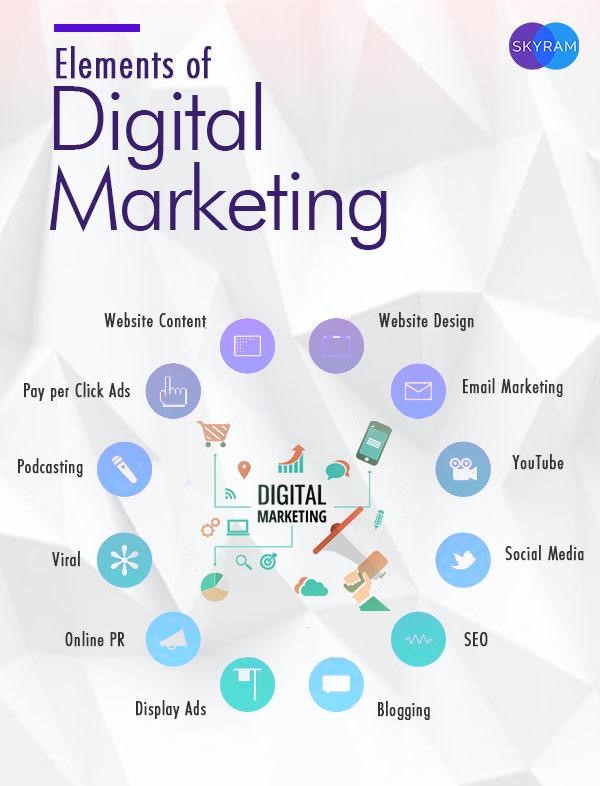
Elements of Digital Marketing

Digital Marketing Strategies for Startups

1) Email Marketing

A lot of people might consider email marketing to be a bit of an old digital marketing strategy. However, emails are offering a good return on investment to the marketers. According to a recent survey conducted by Demand Metric and Data Marketing Association, it was found that email marketing has an impressive ROI of 122%.

This is four times higher than any other marketing channel. It is true that a lot of startups are aware of the power of email marketing. However, they are not able to harness it.

Follow these to create a successful email marketing campaign:

  • Create a catchy subject line
  • Avoid all sorts of jargons
  • Break up the text
  • Talk clearly about the benefits
  • Optimize the email for mobile devices
  • Include a professional email signature

2) Social media marketing

There is no doubt that social media is one of the most powerful marketing tools these days. Social media increases traffic and exposure, helps in developing loyal customers, improves search, generates leads, conversions, and whatnot.

However, to build a strong authority on social media, you have to create good-quality content on a daily basis. It is important to maintain consistency and engage with your audience. You can use social media marketing tools like Hubspot for engaging with your audience and monitor the social media mentions.

You have to choose the right social media platform and then create a marketing strategy. If your target audience is mostly on Facebook, then Facebook should be your focus point. As a startup, you have to keep track of where your target audience is. To build a good social media marketing plan, you have to build a customer persona and then create a strategy.

3) Search Engine Optimization

It is common to think that when you have an awesome website design and optimized service pages, people will come to your site. You are wrong! There are thousands of websites on your niche. So how will your website come up on top when people look for similar services or products?

This is where SEO comes in. Search Engine Optimization not only increases traffic to your website but it also builds trust. When the website ranks high in the search results for keywords related to your services or products it indicates that you are a reputed brand.

Search Engine Optimization strategies like on-page SEO, off-page SEO, local SEO, and content writing, are must for any digital marketing strategy to work. Use tools like SEMrush to keep track of your website’s SEO.

This will help you in conducting keyword research, track the SERP rankings, monitor the competitors, and help you find out where you are compared to them. To get your search engine optimization attributes in order, you can opt for a good SEO company.

4) PPC marketing (Google AdWords)

Pay-per-click marketing is a form of using search engine advertising to get more visitors to your website. This is a very powerful marketing tool for generating sales-ready leads. Pay-per-click advertising brings a lot of advantages. They are as follows:

  • It helps to reach your customers at the right time with the right ad
  • It offers a high ROI because you will have to pay only when someone clicks
  • You will have control over how much you want to spend.
  • You will not have to wait for results
  • Data insights to optimize other marketing strategies

5) Influencer marketing

The trend of influencer marketing has become very popular in the last few years. It was observed in a study that 84% of the marketers expect to launch at least one influencer marketing campaign in 12 months.

Influencer marketing is a very useful tool for startups for growing their brands. Here are a few reasons why every startup should consider influencer marketing.

  • Most of the customers don’t like traditional marketing channels
  • Influencer marketing is less costly than other promotional strategies
  • It is easy to execute
  • With the word-of-mouth promotion, influencer marketing builds trust for the brands
  • Customers engage with brand because influencers feel much more authentic

Even if you don’t have a high budget, you can find micro-influencers for startups. They have higher engagement rates than macro-influencers. The best part is, they charge less because of a comparatively smaller follower base.

6) Retargeting Ads

You started your business because you believed in your idea. However, that doesn’t mean that your audience will believe in your products or services.

You have to convince them about your products and services. They will need one or more nudges before they would want to become your customers.

Retargeting does the job for you. Retargeting is a means of marketing where you show the relevant ads to those that have already visited your website.

When anyone visits a website, a pixel (a piece of JavaScript) is placed within their web browser. In simple terms, your visitor’s web browser is cookied.

With effective retargeting ads, you will be able to convert the visitors that have earlier shown interest in the products or services and enhance the conversion.

7) Content marketing

Content marketing is something that no business can avoid these days. 90% of the B2C organizations are serious about content marketing and 88% of the B2B marketers agree that content marketing is a very important segment of digital marketing.

The reason why content marketing is so effective is that it helps in mapping the content strategy for following the different stages of a buyer’s journey. You will create new content that your target audience will love.

Using content marketing, you can do the following:

  • Increasing the visibility of the brand
  • Create long-lasting relationships with the customers
  • Boost brand awareness and brand recognition
  • Develop credibility and brand authority
  • Content marketing also supports SMO and SEO efforts

8) Viral Marketing

For startups, the best way to create a buzz on the internet is to go viral on the internet. If it is done in the right way, it can help you get your business an overnight success.

The interesting thing is, viral marketing is a combination of all the marketing efforts we mentioned above. So how do you go viral? Well, you can do something that is out of the box and leverage social media to get attention.

It will cause an intense surge in traffic to your website for a certain period. This works as a boost to your brand recognition and awareness plan. Once you are trending in social media, your job is half done. Now it will be a lot easier to convert the traffic into your customers.

9) Referral marketing

Doesn’t it feel good to let your audience do the promotions for you? This is exactly what referral marketing is all about. This is one of the best digital marketing strategies where your audience does the promotion of your brand.

When you launch a referral program for the promotion of your products and services, you can share a referral code with every customer and they can share those in their circles. Now, when anyone of their circle purchases from your brand, you will be able to provide a freebie or discount to the referring customer.

This will motivate them to refer more people and that in turn, will help you grow your startup. To set up a referral program you can use different tools that will help you set up a campaign on social media or mobile apps easily.

10) Affiliate marketing

Affiliate marketing is a lot similar to influencer marketing. It also relies on the influence of people to draw in more sales. This is why you have to consider integrating affiliate marketing campaigns with influencer marketing.

In affiliate marketing, you can just sit back and enjoy the show because others will be doing the marketing for you. What happens in Affiliate marketing is, you recruit affiliates for your brand to draw leads.

Think of them as salespeople who work on a commission. You will decide on the commission. Whether you want to pay them according to the sales they generate or on a flat fee per product, will depend totally on you.

Now, the question is, how do you keep a track of these sales? You can do it through affiliate links. The affiliate links are customized links that you offer to your affiliates. They share the link in their social media circles and their social media contacts can use the link to visit your site and buy anything.

You can use tools like Google Analytics for generating customized links. Along with that, you can also track the number of incoming sales from every link. This will also help you in tracking the performance of your affiliates.

In conclusion, It can be said that building up a successful startup is surely an uphill battle where you have to go through intense competition. However, using these digital marketing strategies for your startup will help you establish your brand and your startup. All these above-mentioned digital marketing strategies are proven to deliver high ROI.

YouTube for Business – Effectively using all the features of YouTube

Previously, when someone used to say about using social media for business, most of the times it was about Facebook or Twitter. Since it is a video platform, YouTube was not considered as a marketing platform for business at first thought. But things started changing with time.

Being a small business owner, you must be thinking of ways to promote your business. Well, YouTube can be one of the most important weapons in doing that. Whether you are looking to increase your social media outreach, increase online visibility, and increase conversions, YouTube can do that for you.

The best part is all these things can be done without making a dent in your pocket. If you are not sure how to grow your business using YouTube, this blog will help you. Here are 8 ways YouTube can help you in growing your business.

YouTube can get you billions of traffic

There is no doubt that the popularity of online video platforms is growing exponentially with billions of users at present. And YouTube is one of the most popular platforms in the category of online video. If you can create videos on your business or something related to your business and post it on YouTube, you will find a lot of views in a short time.

YouTube has become so popular that you will find a huge number of people who are checking your videos. This is guaranteed. As long as you can provide something valuable for your audience, or provide solutions for them, it will not be difficult to find viewers on your YouTube channel.

YouTube helps you get found in Google

Because of the Google Universal Search feature, Google fetches results in all formats, whether it is a video, an image, news, or a book or any other form. This is to help people find what they are searching for.

Now, videos have started coming up more and more in the search results of Google. Thus, it is pretty evident that Google thinks videos are as important as any text-based webpages. Thus, you can take advantage of this scenario. Create quality content, write about it on your website, and then create complimentary videos on the topic explaining it.

By using YouTube as a part of the marketing strategy for your business, you will also increase the authority of your website. Associate your domain name with your YouTube Channel, share your YouTube videos on social media and try to get other website owners to embed your YouTube videos on their websites. This is how you reach more audience.

Your content will remain ever-lasting

How? When you start using YouTube for the business you will find a lot of instances to re-purpose your videos without spending a lot of time. Repurposing the content is an effective form of content marketing.

For instance, a blog can be repurposed as a podcast, infographics, presentations, and video stories. Thus, you will be able to create 4 pieces of content from a single idea.

Helping you in having a global audience

This is one of the best advantages of using YouTube for business. When you keep creating videos, share them on different platforms, it offers the audience a portal to visit your website. With YouTube, you can reach a global audience even if you only speak one language.

For instance, if you are a native English speaker, you will have an advantage because it is difficult to capture the widespread English speaking market if you don’t create good content in English.

Apart from that if you include the closed-captions on your videos; you will be able to reach new audiences because you will be catering to people with different needs. Also, you have to include different CTA’s within your videos along with annotations that link with other videos, your web content, email auto-responder series, and offers on your services and products.

Create your email list in YouTube

This is yet another benefit of using YouTube for your business. You can build your email list as you continue to provide good quality content.

You can use software that allows you in embedding the sign-up form directly into the YouTube videos. Thus, any viewer can stop the video temporarily to add their email and subscribe to your list. This is an easy way to build your email list through YouTube videos.

YouTube increases the chances that your audience will promote you

How? When you create personalized videos for a specific target group of audiences, then those videos connect more with the audience. This leads to more conversions. People start trusting your brand which leads to increased sales.

According to researches, for professional services and general companies, if you drive your traffic to a landing page with a video of someone from the company speaking about the product or service, it increases the list of leads and sales.

Target audience with AdWords for the vides

Because of Google AdWords, it is now possible to get a laser-focused audience by advertising on the videos. It increases your chances of audience watching and searching for your videos. The best advantage is, you only pay for the engaged views.

An engaged view occurs when a viewer checks your ad for 30 seconds. Thus, the major benefit of AdWords for video is it has the potential to grow your audience through multiple ‘earned views’. The views are earned when someone chooses to see your video ad and then watches one or more videos on your YouTube channel in 7 days.

You can make more money with AdSense for video

When you create regular video content, it offers you the opportunity to earn money directly from the videos. This happens through Google’s AdSense for video program. Also, you can use AdWords and AdSense together for making some money from your video campaigns as well.

It works like this:

  • The viewer will see your video ad in a different video and then click on it.
  • You will pay for the click as a part of the campaign budget.
  • When the viewer goes to watch your video, viewing the ads from another content creator.
  • The viewer clicks or watches the ads and you will be paid 68% of the ad revenue.

Thus, you can run AdWord campaigns for your videos while making money by allowing others for advertisements on your videos. In this way, YouTube can help you promote your business and brand to grow.

Paid Search Offers – How to create profitable and effective offers

When it comes to paid searches, the most important thing that matters is how good your offer is. If the offer is not good enough, it doesn’t really matter how good you are at paid search campaigns. Now, how can you make the paid search offers a successful one?

Because marketers do not control the products and services. Also, business owners and brand managers may not be familiar with what works for what channel. Thus, it can be tough. Yes, we know that you have got a lot to handle, like the campaign build-outs, conversions, landing pages, brand compliance, and more.

This is why this blog will help you in creating the best paid search offers. Here is what you can do.

Think about what you are going to sell with Paid Search

The first thing you need to ask yourself is how will the campaign make money? And then, which business products and initiatives will be supported with the paid search campaigns?

Do not try to automate the paid ad campaigns without knowing the business. This will make things harder because you will have no idea where to improve.

Once the inventory is sorted, think about how you can define the offers. An offer has three elements, the thing you sell, the price at which you sell and why should people buy it.

This will need thorough research on the market. However, when you clearly define these factors, you will create an attractive offer.

Check for the product-market fit

Product-market fit means; your offers should solve a problem or meet the demand of your audience. You have to think about this before you invest in advertising.

If your product is not needed in the market, no paid search campaigns will work. Companies that invest in ads before validating them will ultimately lose their money.

If you still want to run paid campaigns, the objective has to check the validity of an idea, not running profits.

Use lower offers

Your paid offers should be Middle of Funnel or Bottom of Funnel and not on the top of the funnel. Top of Funnel resources includes infographics and whitepapers. These are great for creating awareness and list building.

When it comes to paid search, the focus should not be on the Top of the Funnel. Why? Because when someone will see your ad, they are already looking for a business like yours.

Thus, they can straightaway book an appointment with you. Since the CPC’s for paid searches are expensive. It is not a good idea to spend on the clicks on the top of the funnel only to spread awareness and attract people that are not ready to start a business with you.

Yet, a lot of times companies prefer to spend on the top of the funnel. That’s preferring tradition over optimization instead of a proper funnel analysis.

Think about the back-end profits

You have to track the profitability to confirm that the campaigns are profitable. The problem with Return on Ad Spend (ROAS) is, it doesn’t include the cost of goods sold, distribution costs, shipping costs, merchant fees, indirect labor, and other expenses.

The problem with leads is, they are not customers. The calculation will get even more complicated with lead generation and subscriptions. Also, high conversions don’t necessarily mean profits.

A lot of businesses will not know the difference between a profit and a real-time conversion. Without any integrated CRM tool, most of the companies can’t know.

To deal with this, create targets and goals using the estimates for profitability. And it should be based on existing inputs. Check the assumptions when you have gathered the data.

Using the landing pages to promote your offers

The landing page is the first page that a visitor will see after clicking the ads. Thus, the major question is, whether the page is optimized to drive sales or not? Most of the companies will fail at this.

It is important to have a clear call-to-action with precise content to make a clear offer. If the visitor doesn’t find anything relevant after clicking the ads, then it will not help you with the conversions.

A lot of companies use the home page as their landing page. That is fine but does the home page help your audience to know about the offers. Remember that pages like this will never have high conversion rates. Thus, the campaigns keep running for months and years without any profit.

Another common mistake is to use the lead capture forms like landing pages. The lead generation pages don’t share the value of engaging with you. This happens when the brand has to drive leads. If you are more concerned to “incentivize” the forms for leads, you will end up getting low-quality leads.

If the landing page works as an intake form but doesn’t encourage the visitors to take action, then you will lose a lot of valuable prospects. You have to position your business as a strong solution to their problems, not just force them to be your customers.

Remember the three P’s of your offer

The three P’s are Product Price and Positioning. Even if your Google ad wins the click, it is not easy to win new business. Since your prospect is researching for solutions, they will also find your competitor that can solve their problem.

To make them understand that you are the best, focus on the three P’s.

For a product follow these guidelines:

  • If you are offering a course, share a free lesson.
  • When you are offering consultation service, share a free consultation.
  • If you are giving an in-person service, create a demo
  • If you are offering a physical product, show how it works in videos and images.

Be clear about your offers; make sure they experience what it gives them. A confused mind will always say no. So never keep your audience guessing.

For the price, follow these:

  • If you are offering discounts make sure they are worth it. For instance, saving $20 on a $45 item is a great deal, but saving $30 on a $1000 item is an insult. So offer discounts accordingly.
  • Versioning your products will help you provide multiple pricing options without discounts.
  • Make sure to offers warranties and guarantees to justify the investment.

Finally, for positioning, you have to remember that positioning involves how your audience sees you compared to your competitors. Use Auction Insights Data to know which businesses are doing better than you in the auctions where the ad is showing.

Check the landing page optimization and the offers they are using. This offers a lot of valuable insights. Review your competition and adjust the messages accordingly to get into the attention of your audience. This is how you create a profitable and effective paid search offer.

Defining SEO vs. SEM vs. PPC in the Industrial Manufacturing sector

A wide array of newbie digital marketers will mix up these three terms mentioned here. Sometimes they use all the three terms SEO, SEM, and PPC interchangeably. However, that should not be the case.

Yes, there is one thing common between all three terms. Different brands and digital marketers use them to increase online presence, visibility, and brand recognition so that websites and social media profiles can get more traffic.

Now that being said, there are a lot of differences between these three terms. In this blog today, we are going to clear all the differences between SEM, SEO, and PPC used for industrial manufacturing.

What is SEO (Search Engine Marketing)?

Search Engine Optimization includes the collection of actions that brands and digital marketers take to increase the traffic of a website organically. In simple terms, they do not have to pay anything to the search engine to get traffic.

There are different types of SEO. These include on-page optimization, off-page optimization, local SEO, use of strong links and backlinks, and more. However, all the major search engines work on algorithms. They are updated periodically. Therefore, the SEO strategies have to be updated from time to time according to the change in algorithms.

What is SEM (Search Engine Marketing)?

Search Engine Marketing includes the actions that increase the online presence of a brand through paid methods. At present, Yahoo, Google, and Bing are the three most popular search engines. Thus, marketers make use of paid promotional methods to make sure that the website gets the necessary mileage in the digital world.

A lot of digital marketing experts have the opinion that SEM includes both organic and paid methods to increase online presence and get a website ranked. This is why it is an umbrella term that includes both SEO and PPC.

What is PPC (pay per click)?

This is simply a paid method to promote a website. In this method, the brands pay the search engines to get traffic. In the PPC services method, the brands place the ads on the search engine results page. Now, every time there is a click on the ads, the advertiser pays the search engine.

This is special because the search engines run PPC campaigns on real-time bidding. Since the advertising inventory is limited, the advertisers have to bid like it is a private auction. However, this is an automated process where the search engines use a formula to gauge the price and advertisers pay up a fee for every click.

PPC ads are mostly the banners that you see on the corners of a window or at the first of the search engine results page. They are marked as ads or sponsored results. There are a lot of websites as well that offer PPC opportunities. There are different forms of PPC ads but search, display, and remarketing ads are the most used ones.

PPC is easier to set up than SEO but it guarantees only visibility. Also, you will have lesser control over the type of traffic it draws.

Some Industrial SEO examples

  1. Air Innovations gets a featured snippet along with a strong SEO strategy

Air Innovations is one of the most popular manufacturers of environmental control systems. They have almost 2000 sessions on their website. The company needed a plan to increase organic traffic. They also needed an ongoing SEO strategy depending on the keyword research along with a content plan that is focused on diversification of content. With blogs including long-tail keywords and supporting backlinks, Air Innovations saw results with increasing website ranks and a ‘featured snippet’ on Google.

  1. Triad Magnetics attains a website analysis for increasing

Triad Magnetics is a manufacturer of multiple electronic products like inductors, transformers, high-frequency magnetics, and power supplies. Initially, they saw little growth in website metrics and they realized it was a time for website redesigning. Also, they were looking to increase page views and site speed as well.

Google rewards the website that produces long content and is updated on a daily basis. With a newly designed website, Triad Magnetics got increased traffic, a well-sorted product catalog that helped in lead generation and conversion.

Reach out to more buyers with digital marketing campaigns

Just like any other business, marketing for industrial manufacturing companies needs careful planning and experiments, especially when it is starting out. It is important to remember that digital marketing doesn’t just involve quick fixes to increase online visibility. The lead generation and buying process of industrial sectors are a bit complicated. Thus, to reach out to your audience at all stages, you have to be where your audience is.

If the end goal is to simply boost visibility and traffic, then SEO, SEM, and PPC are great. However, at the same time, you have to understand what works best for your brand. This is only possible when you have a clear understanding of the differences between SEO, SEM, and PPC. Then you will know how to use each of them separately for industrial manufacturing companies.

Three primary reasons to understand the difference in SEO, PPC, and SEM

  1. One of the primary reasons to understand the difference is, you or your brand will be the one putting money in the ads, promotions, and all the activities. Unless you know the difference, you won’t be able to access the data and understand the analytics. Once you understand the differences, you will know what works and what doesn’t work for your brand. Thus, when something doesn’t work out, you can figure out where the problem is and what else can be done to make things work.
  2. Another reason is the budget. At the beginning of the year, you will make a budget on how much you will be spending on the marketing activities and promotions of your website and brand. Just like the offline world, the online world too has a lot of marketing activities that require a lot of tools. When you know the differences, you will be able to figure out what tools you need and what methods can be used to get the best results.
  3. The final reason is, once you understand the differences it will help the internal team to pass on the right message to the audience. When you and your team are clear about SEO, SEM, and PPC, you will use the right method to pass your information to the outer world. If you don’t know the difference it will have negative impacts on your brand reputation and the online world.

In conclusion, it can be said that there is nothing black and white in the online world. There is no one right way to do things. You have to figure out what works for your brand and what doesn’t. That’s it. Anything that works is right and something that doesn’t is wrong.

Optimize your Google and Facebook Ads with Events – Here is how to use it

To start off if you have a busy website a lot of visitors will be interacting with it. Now the question is are you making the best of the digital marketing campaigns and everything else that is going on with your website? You can make use of every interaction, a pageview or a click can be useful for understanding your audience.

Once you understand your audience, it becomes easier to target them in a much better and smarter way. If you want to make more profit from your paid campaigns on Google and Facebook, you should start using Events. It helps you in tracking the interactions by installing a tracking code on your website.

The best example of an event is the ‘Add to Cart’ option. Another event is filling out of one or more fields in a form and not submitting it. This is also recorded as an event. In simple terms, you can record or track any action that the user makes through Events. It could be as simple as watching a video, clicking a link, or downloading a simple PDF.

How to set up Events on the website

With both Google and Facebook, you will need a code to set up Events on the website.

Firstly, you have to verify that you already have a Facebook Pixel code within the header code of the pages of your website. If you don’t you have to enter the base pixel code before anything.

Now, you have to choose the event that you want to track for a certain page from the event list of Facebook. for instance, if you want to track the “Add to Cart” event, you have to copy the Add to Cart event code.

It looks like this “fbq{‘track’,’AddToCart’}. Copy it and paste it above the tag. You have to repeat this process on multiple if you want to track multiple events.

How to set up Event tracking using Google Analytics?

If you want to get more insights, then you can also use Events in Google Analytics. You have to create custom code snippets for all the events.

The code is added to the link code of every action that you want to track. When you click on it, the item gets displayed on Google Analytics. The event code is made up of four elements. They are as follows:

  • Category – it defines the group of action you want to track
  • Action – The type of action you want to track
  • Label – it helps in monitoring and states what the event is all about
  • Value – This is just assigning a simple numeric value to the event. It can be a monetary value or a scale.

The basic structure will look like:

onclick=”ga(‘send’, ‘event’, ‘Category’, ‘Action’, ‘Label’, ‘Value’);”

The code needs to be added within the href link code before the link text, which looks like this:

Download Our Brochure

There is no value assigned to the event. Now, is there a better way to do this? Yes, there is. you can use tools like Oribi that tracks every interaction of a website.

It will collect all the data and present it to you. Even if you make certain changes like adding pages or changing buttons, the events get updated. The best part is, all this is done without any coding.

How to use Event data for optimizing paid campaigns?

You can use all the data to optimize the paid campaigns. There are two objectives of tracking event data. They are:

  • Internal – where you can analyze how the visitors are interacting with the website
  • External – where you export the data to the paid campaigns to categorize them in a better way

Consider the “Add to Cart” event. The visitors didn’t buy, however, they showed interest. this is worth the effort. Every user is different. Now, to make sure they purchase in the future, you can, for instance, create a category for the visitors who added a shirt and a category for visitors who added a shoe. This categorical customized will help you in your paid campaigns.

Both Google and Facebook offer strong optimization features for the paid ad campaigns. The reasons behind this are:

  • It helps to segment your audience and deliver a relevant message
  • It helps in reaching new audiences that are related to your offers

Google’s Remarketing and Facebook’s Retargeting

The objective of both of them is the same. In layman’s terms, when you visit a website, a tracking cookie gets installed on the browser when you accept the cookie message. When you leave the website, you get to see the display ads from the website. This is what Google remarketing is.

This is very effective because it compels you to stop scrolling and think about the website or the product once again. If you click on the ad, it will take you back to the website and the product once again.

Google’s Similar Audience and Facebook’s Lookalike

Based on the characteristics of your audience, Google and Facebook can target similar people and show your ads to them. But how do Google and Facebook do that? The algorithm locates their interests, location, demography, and professional background.

For instance, your audience takes action; it is recorded as an event. Now, once you define the visitors, the algorithm finds similar visitors who took similar action and shows your ads to them. This is a great tool to expand the potential audience and reach more people.

The complete process includes three steps:

  • Identify the events and insert proper codes for all pages and event types.
  • The way you define an event is important for the success of the ad campaign.
  • When you set up the event you have to enable Facebook and Google to use the data collected from Event tracking.

Using Facebook Event tracking for ad optimization

Once you insert the event tracking code to different pages of the website, the event data becomes available to the Ads Manager.

  • Now, to locate the data, log in to the Ads Manager, click on the Pixels tab
  • Choose the ‘data sources’ on the left
  • It will take you to Pixel and you will see the generic breakdown of events
  • Now, click on the ‘details’ tab
  • Here you can see the breakdown of events by date and volume.

Now you can categorize the visitors by their actions.

Using Event tracking for Google Analytics and AdSense

The first step is to define the events in Google Analytics.

  • Click on the ‘Admin’ tab and then click on the ‘goals’ tab.
  • Choose the ‘new goal’ option
  • Now, click on the ‘custom’ option
  • Name your goal
  • Select ‘event’
  • Now, you have to refer to the four elements that you defined in the event code “onclick=”ga(‘send’, ‘event’, ‘Category’, ‘Action’, ‘Label’, ‘Value’);”. There will be a specific box of each value.
  • Remember that the text you enter should be identical to the text in the code. If it is not, the event will not be recorded.

Repeat this process for every event tracking.

Now, you have to import the event in Google Ads.

  • Click on the ‘tools’ tab present at the top navigation bar and choose ‘conversions’ from the dropdown menu.
  • On the left side, click on ‘Google Analytics’
  • There is a list of existing goals in Analytics.
  • Choose the ones that you want to import

That’s it. The events you track will be available for segmenting.

In conclusion, it can be said that the Event tracking helps you with valuable data on the website visitors like specific interests, level of intent, and place in the funnel. Using this data, when you optimize your paid ad campaigns, you can better engage your audience, increase conversion, and generate more ROI.

5 Reasons to Choose Brand Influencers over Bollywood Celebrities

To start off, it is true that digital marketers and brands have always relied on Bollywood celebrities from time to time for endorsements, increasing brand awareness, recognition, and boost sales. However, a lot of things have changed in the last year. At present, the major brands want to collaborate more with social media influencers instead of traditional Bollywood celebrities.

What is the reason behind this sudden change?

Well, Sushant Singh Rajput’s untimely demise has played a vital role in this. How? Yes, we shall get into it. Firstly, with the increase in popularity of TikTok and other video making applications, there has been an increase in the number of social media influencers.

Major brands started connecting with TikTokers, Instagrammers, YouTubers, admins of Facebook pages, people with a large number of Twitter followers. The reason behind this was, a single post or video from these people would bring a lot of visitors, increase conversions and profits to these brands.

These people with so many followers have the capability to drive sales. This is not something an expanding brand can ignore. Now, this was an emerging trend where companies and brands were drifting towards the influencers. However, with the death of Sushant Singh Rajput, there was a whole new momentum in this emerging phenomenon.

What is the effect of this sudden shift in mindset?

With the ongoing CBI investigation on Sushant Singh Rajput’s death, there have been numerous speculations and assumptions among a lot of people. There is no final verdict as of yet. However, all this has resulted in a strong hatred towards a large segment of major Bollywood celebrities.

The list of Bollywood celebrities who people have started hating is really long. It specifically includes Mahesh Bhatt, Alia Bhatt, Salman Khan, Karan Johar, Amir Khan, Sonam Kapoor, Sonakshi Sinha, Jhanvi Kapoor, and the list will go on.

Not only are these people hated, but most of these celebrities had to deactivate their social media accounts. The scenario became such that even their movies are getting 1.1 ratings at IMDB (specifically speaking Sadak 2, released on 28th August 2020).

A lot of Bollywood celebrities have lost a large number of followers on their social media accounts. To sum up, the B-town celebs are facing the wrath of the common people. It’s like there is an anti-Bollywood campaign going on. Amidst this scenario, the brands associated with them are also getting severely affected.

People are losing interest in using the products of the brands endorsed by these celebrities. Thus, in the Indian market, a lot of brands are losing customers. With this effect, it has become critical for the brands to drop the celebrities and instead opt for the influencers.

Now, let us check a few other reasons why it is better to opt for brand influencers instead of celebrities.

Why should you choose the brand influencers and not celebs anymore?

Purchasing power

Brand influencers have more power to drive purchases, increase sales, and increase conversion. According to a recent survey of 14,000 consumers in the USA, it was seen that brand influencers are more effective in driving sales.

A report from ZD Net mentioned that 30% of the consumers are more likely to purchase products endorsed by a social media influencer or a blogger than a celebrity. 70% of the Millenials prefer “peer” endorsements instead of recommendations from traditional celebrities.

Social media influencers appeal more to the Millenials

As we mentioned above, most of the Millenials grew up in the digital age. This is why the demography of young consumers prefers influencers more. They trust them.

73% of the young teens and Millenials connect to the YouTubers. They are more likely to try a product recommended by a YouTuber. On the other hand, less than 50% of them would try out a product recommended by celebrities.

Women don’t trust celebrities

With the uprising of more trusted reviews from digital influencers, female consumers don’t trust celebrity endorsements and traditional advertisements. In a survey of 1500 women, 86% of them trusted products and reviews offered by “real people”. 58% of the women said that they learn more about the products from reviews offered by YouTubers and social media influencers.

Brand influencers are much more relatable

Simply put, they connect more with the common people. Without the support and preference of the common people, no brand can exist in the market. Thus, with the increasing number of followers for the social media influencers brands are more inclined to connect with them.

In a survey of more than 500 marketing professionals, 80% of the marketing executives mentioned that they work with brand influencers. Also, the poll claimed that the majority of them prefer working with social media stars instead of collaborating with sports stars, actors, musicians, and models.

Who wins the ball game? Brand influencers or celebrities?

Since more brands are choosing to collaborate with the digital influencers, the marketers are seeing a shift in the preference of the consumers. The choice of brands, products, and lifestyle has changed.

At present, almost 60% of the fashion and beauty brands already have an influencer marketing strategy in place. There is no doubt that the celebrities that used to influence the purchasing decisions are now taking a backseat.

Unlike traditional celebrities, who are more aloof to the common people, the social media influencers are more of a “regular people”. That makes them more accessible to people. Most of the popular YouTubers, Instagrammers, and other social media influencers still work regular jobs. Followers can relate to that.

Yes, the celebrities do have a large number of followers but the digital influencers have a dedicated audience. They interact more often with their audience and engage them more with their content.

Finally, for the brands that are looking to capitalize on the visibility and appeal through influencers, it is important to opt for influencer marketing with viable advertising channels and accurate marketing campaign strategies.

How to Use Google Data Studio – A complete beginner’s guide

If you ask someone how did they get their digital marketing reports done in such an organized way, the answer will be simple – Google Data Studio! It comes with a wide array of Google essentials and more powerful data sources.

Google Data Studio compiles a wide array of sources for data reporting and analysis. You will get Google Drive files, option to filter data, report pages, create charts, and do more edits from the dashboards.

Google Data Studio is free. As your client base continues to grow, you will need more sophistication on the reports. Introduced in 2016, Google Data Studio brings all your data sources into one reporting experience.

In this blog today, we are going to share the complete details on how to use the Google Data Studio. There are certain areas that you have to learn. These areas will make sure that your Google Data Studio is a successful one. These areas include:

  • Using the right template
  • Connecting the proper data sources
  • Selecting the right metrics
  • Sharing reports

How to use the templates of Google Data Studio?

This is the first thing to do while using GDS. You have to choose a template from the wide range of templates offered by Google Data Studio. If you are new, then it is important to choose the ones based on the type of data you will show.

You can customize fonts and create a consistent report with multiple pages. Since every client has different requirements, the presentation of reports should also be different. The best way is to create templates based on SEO, PPC, and paid social.

This will help you to customize them according to the client’s needs.

How to add the data sources?

Connecting the data sources is very important to create a great report. There is a myriad of connectors in GDS. When you use the connectors, it will take away the manual tasks and sync all data for you.

You can add the data sources at the beginning of the report of you can add them later on. You will find them in the “Add Data” toolbar. However, there are a lot of third-party connectors as well.

But the problem is, the third-party connectors come with additional cost, slows down a report and sometimes the metrics are deprecated.

How to choose the metrics that matter?

Metrics are important because your clients would not want to see a data dump. However, this doesn’t mean that you should use all of them. Use the ones that are needed.

For instance, if you want to improve your brand awareness, then you have to include pre-click metrics like clicks, impressions, view rate, CTR, and more.

using proper metrics and insights on goals, it will show the client that they are getting what they want. This is a win-win scenario!

Sharing the reports

When it is time for reporting and analysis, make sure to review the settings. You will get the following options:

  • Inviting by email (the user should have a Google account linked with the email). You can assign the user to “view” or “edit” permissions.
  • Anyone with the report link will be able to view the report.

Another cool feature is the option to limit sharing. This will do the following:

  • Prevent editors from changing access and add new people
  • Disable any download, view, or copy for the viewers.

How can you build and edit a report?

Let us guide you to build a report in Google Data Studio. The first thing to do is to choose the proper visuals.

Go to the toolbar and click on “insert”. You will have a wide array of options like Time series, Pie chart, Bar chart, Scorecards, Tables, and more.

Let us consider four segments of a Google Ads template.

report in Google Data Studio
Source

The first one is the Scorecard section. It shows a single metric taken from a data source. Depending on the source, you can choose multiple options like CTR, clicks, and impressions. It will also show the comparison changes.

The next is the time series. It will show you the change in clicks and CTR over a pre-set period of time.

The third segment is the table which allows you in drilling down the campaigns, ad groups, and customizes the metrics.

The fourth one is the Pie Chart. This is another tool to showcase comparisons between different data points like clicks, conversions, costs, and more.

All these features can help you in customizing the look of the report.

How to edit data formats?

This is how you change the look and feel of the report. For editing the format and style of visualization, you have to select a scorecard.

On your right, you will find the Google Data Studio editing panel. You can change fonts, background colors, change the comparison, and metric colors, text padding to align it left, right, or center.

If you want to select all the scorecards at once, select all of them at the same time. This is how you apply the style changes to all of the selected scorecards.

How to add report filters?

The best way to group multiple visualizations is by adding reports and page filters. For instance, if you want to change the tables and charts while editing the data range, all you have to do is all a data range icon.

Thus, even if the report is compromised, whenever the data range is updated, all the chart data is updated along with it.

If you want to get into the Device Type performance, there is also a filter for that. Go to “insert” then click on “filter control” and add the dimension of the “device” as a filter.

Even if you want to review the data by network type of Search or Display or YouTube, there is also a filter for that. Choose the Advertising Channel Type as the dimension while adding the filter.

Then there is the dashboard that gives you an overview of the website traffic, conversions trending, user behavior trending, device-specific conversions, and traffic, and more. You can check the PPC campaign performances, and search term reports.

In conclusion, it can be said Google Data Studio is currently the best way for creating reports and analytics. This introduction will help you in creating a customized and detailed report for your clients.