COVID-19 and lockdown – A boon for numerous startups and brands

Well, a phenomenon that comes as a curse to some business organizations, is the same phenomenon that works as a boon to other businesses. Let us take the scenario of the COVID-19 and lockdown. With the coronavirus outbreak, the whole world came to a standstill for sometime. However, that didn’t stop a lot of business organizations to continue their business as usual. The “new normal” helped them adopt and they flourished.

We all must have heard “desperate times require desperate measures”. This global lockdown was definitely a desperate time for a wide array of businesses. So what caused them to flourish? This blog explores multiple business organizations, startups and brands that showed significant growth during this situation.

SL NO Top digital marketing trends in lockdown Growth in usage
1 Social media marketing/advertising 51% of Indians use social media. Social media ad spending reached $730M (+3.4% increase than 2019).
2 Influencer marketing Influencer marketing budgets increased by 65% where 19% of the marketers spent between $1000 – $10,000 on influencer marketing.
3 OTT advertising Increase in users in OTT platforms by 20%. Ad insertions on OTT platforms increased 35 times in COVID-19..
4 Search Engine Optimization (SEO) 64% marketers actively invest time in SEO and 25% of the companies invest in mobile optimization as their top SEO tactic.
5 Pay Per Click (PPC) 30% of the organic web traffic comes from PPC. Google’s responsive ads performed 6% better and generated 9% more conversion.
6 Content marketing Use of content marketing as a digital marketing strategy increased by 16.2% in 2020.

The COVID-19 effect on Indian startup ecosystem

Before we start getting into the companies that are doing great even in the coronavirus situation, let us tell you that there has been a paradigm shift in the thought process of business organizations, especially due to the lockdown. Instead of the sole focus on profits, companies are prioritizing growth.

Now, whether this proves to be effective or not, that is debatable. However, the rising number of startups and the way these companies have grown in this tough time, is commendable. In India, the number of startups have increased from 7000 in 2008 to 50,000 in 2020.

To support the people of the country with tech-enabled innovations a lot of organizations are closely working with state and central government authorities. Overall, this has led to a mass digital awareness among the people in India.

Consider the e-learning startups

The e-learning segment of startups in India was the least expected sector to have a positive impact during the COVID-19. However, the companies like BYJU’s, Unacademy, Vedantu, Whitehat Jr and Toppr have experienced a 3 times surge in their usage since the first phase of lockdown in March 2020.

Consider the e-learning startups

Since the schools, colleges and universities were closed these startups helped in bridging the gap while taking education to a digital level in India. The e-learning firms, which used to have monthly visits of 102.2 million, recorded almost 130 million visits in the initial 30 days of lockdown.

The overall engagement of students and professionals increased to 8.5% during the lockdown period. E-learning startups saw a rapid growth both in terms of user engagement and new users amidst the lockdown.

The e-pharmacy startups

E-pharmacy has become the backbone of multiple cities in lockdown to fight against the pandemic. Online pharmacies like Medlife, PharmEasy and 1mg are offering contactless home delivery of medicine in bulk. Not only that, you get a wide array of medicines in one platform and also online prescriptions from a registered set of doctors.

The e-pharmacy startups

Due to these benefits, more and more people are buying essential medicines and supplements from these online platforms. The online pharmacies store and analyze a wide range of customer data. This is very helpful in planning different public health policies. It is beneficial for the Micro, Small, Medium Enterprises (MSMEs).

Moreover, the consumers can check the enrollment materials available or the various health plans for information. The online pharmacies have their own app that sends frequent reminders for medicines. These features have become quite helpful to keep a track of your health.

Online grocery startups

The biggest online grocery startups in India, Grofers and Big Basket, doubled their daily number of deliveries! In fact the demand was so high that it was impossible to get available slots for grocery deliveries for the first few weeks of lockdown. Another reason for lesser available slots was that the migrant workers have returned back to their homes.

Online grocery startups

However, despite these obstructions BigBasket claims that they delivered almost 2,83,000 orders per day. The number was 1,50,000 before the lockdown. On the other hand, Grofers mentioned that it delivered almost 1,90,000 orders daily which was 1,00,000 before the lockdown.

Both the online grocery startups have ramped up their supplies from different manufacturing partners and brands for meeting their consumer demands. BigBasket and Grofers both have hired a new workforce to meet the increasing consumer demands. While BigBasket hired 10,000 new employees, Grofers hired 4500 new employees.

A case study on IndiaMart – how the profit doubled during the lockdown

IndiaMart is one of the biggest online marketplaces for business organizations. This company has achieved something that a lot of companies could not during the COVID scenario. In the lockdown period, April to June, the company posted more than 100% jump in profits.

The best part is, IndiaMart founder Dinesh Agarwal was able to do this even though the company was not able to carry out the field sales. We know that IndiaMart depends mostly on field sales, yet when it was impossible to conduct field sales, then too, the organization flourished.

A case study on IndiaMart - how the profit doubled during the lockdown

Work from home was never an option for IndiaMart. However, what worked is, the team of IndiaMart was better prepared than any other company. How? From February itself, Agarwal had anticipated a slowdown when China was shutting down. They didn’t expect a complete lockdown though. According to Dinesh Agarwal, ”

“We started figuring out as the demand for sanitizers and health essentials shot up. By the second half of March, our focus was on how to maintain business continuity and how to ensure employee safety while making sure the website was running and the call centre too was operational.”

What are the factors that worked perfectly for IndiaMart?

Innovative Thinking

IndiaMart always incorporated a healthcare category. However, within the initial weeks, they realized that due to the coronavirus pandemic, the ‘healthcare essentials’ would be an on-demand category. This is where they turned the tables.

“We started calling up the suppliers, did some innovative thinking. We called up the bike helmet suppliers and asked them since you have a helmet shield can you make face shields? They happily agreed. We also went to the undergarment manufacturers and asked them to make face masks. So, we started to build category by category.”

Variation in Products

Well, to be precise, IndiaMart has got more than 68 million product listings through 1,00,000 categories. Thus, if you don’t find something on Indiamart, chances are, you will not find it on the internet.

However, the variety of products also pumped the revenue, because by then, the companies were not only coming on the platform to get finished products, but also discover different elements like bottle caps and elastic.

Also, this is an important factor that separates IndiaMart from other B2B e-commerce competitors like Alibaba, Walmart, Amazon or TradeIndia. IndiaMart has a different set of targets.

The other companies focus on the top 2000 products that are mostly branded, but IndiaMart doesn’t go like that. “Right from the steel bars to trucks and everything in between is what IndiaMart sells”.

Balancing the costs and customers

In the beginning of the lockdown, the revenue took a massive hit because most of the businesses of the customers were paused. The buyer traffic dropped by 50%. Only one-third of the sales were from telecom or online. This is when IndiaMart started looking for places to reduce costs.

They started automation of multiple processes and eradicated any plans that caused a dent in their pockets. The best thing was, a lot of employees opted to give up the salaries, the company didn’t lay off anyone. According to Agarwal, “We are a slow hiring company, so we didn’t want to fire anyone”.

That was not all. IndiaMart also offered moratoriums to customers that could not pay during the lockdown. With the economy gradually opening up, things started to look better and because of their initiatives, both customers and buyers saw value in IndiaMart.

Balancing the costs and customers

Technology has been the key driver for IndiaMart

In recent years IndiaMart has added layers into their offerings through technology. IndiaMart enabled buyer and seller interaction with a CRM and it has become a place for price discovery platforms for multiple buyers in India.

Even if you don’t buy from India, they have been able to democratize the prices for the buyers. Out of the total expenses, 20% goes into investment for technology and products, while out of 4500 employees, 20% of them are in technology and innovations.

What worked for IndiaMart as their online marketing strategy during the lockdown?

During the lockdown period, most of us used our smartphones to get our essentials delivered. While the COVID-19 has adversely impacted most businesses, it has opened up opportunities for a lot of e-commerce players.

First of all, IndiaMart was the first company to harness the power of the internet in the industry five years ago. The brand segregets its annual marketing budget of 40-50 crore (roughly 12% of the total turnover). 40% of this budget was allocated for TV, 40% on digital marketing and 20% for outdoor marketing.

Mobile marketing has paved the way for IndiaMart during the COVID-19 scenario. Social media marketing, especially using Facebook and WhatsApp further helped in the growth curve. IndiaMart has got more than 70 offices throughout the country.

Every industrial area comprises a service and sales office with the objective to explain the concept of online/internet and how it can solve a wide array of problems. 70% of the businesses started their journey with IndiaMart.

The use of mobile marketing

Mobile marketing has played a crucial role for a large B2B category player like IndiaMart. In the B2B category, IndiaMart is the only app that crossed two million downloads in a year. However, IndiaMart clearly stated that they will not shift to an app-only model because there will always be businesses that are comfortable on desktops.

The target group of IndiaMart includes corporate houses where a wide array of procurement or purchase officers access their platform through desktops. The core target groups include purchase managers, small or large businesses and suppliers in the age group of 25-45 years.

The use of mobile marketing

Mobile has become a conversion tool for IndiaMart where 57% of the traffic comes from mobile. As a part of digital marketing or online marketing, IndiaMart mostly spends on online events, digital and direct mailing. In collaboration with Zee Business, Indiamart targeted tier II cities where they reached 60,000 SMEs in 40 cities.

As stated by Dinesh Agarwal,

“Given the overall uncertainty of how long this continues, our strong balance sheet and a resilient business model will help us navigate the ongoing crisis. As businesses realise the need to migrate online, our strong value proposition will help us get back to growth soon“.

The extraordinary performance and potential attracted long-term investors. On July 23, the Government Pension Fund Global and Norway’s Oil fund bought a stake in the company.

A case study on how BigBasket managed to double its sales in lockdown

Online grocery retailer BigBasket faced a disrupted supply chain and manual labor exodus due to the lockdown. It reduced the operational capacity by 50%. At one point of time, the online grocery store had to shut down its services.

Dealing with the crisis

The Janata Curfew was announced on 22nd March and the whole country went into complete lockdown from 24th March. The day before that, BigBasket had obtained all the local permissions to operate. However, because of the on-field confusions, all the deliveries were stopped by the local authorities and warehouses were shut down.

According to BigBasket Co-Owner Hari Menon, “We had to shut down our delivery services immediately after the lockdown announcement due to a lack of awareness around ‘essential workers’ like our delivery service team. They were repeatedly halted at checkpoints or sent back home.”

Dealing with the crisis

The single biggest issue was the shortage of staff because the majority of migrant workers were leaving for their hometowns. This is when BigBasket had to switch only to the essential supplies. From a listing of 32,000 stock keeping units, it came down to 3,500 units. They were able to deliver only 30,000 orders a day while the usual number of orders were 1,50,000 per day.

However, in the last few years, BigBasket had invested heavily in the development of the infrastructure capabilities, supply chain and network warehouse. This proved useful in the lockdown.The farmer partners, mills and fast-moving consumer goods helped with the supply-chain. Also, BigBasket partnered with the National Restaurant Association of India, Uber, etc. to ensure that it was possible for them to deliver to more people.

Bouncing back to full-on operations

With the limited workforce, BigBasket carried out a lot of tweaks and automation. With all the changes the productivity increased to 23% and it was possible to deliver more orders with lesser people. What were the changes?

BigBasket started by thinking how to get more people to utilize one slot. They encouraged people to buy together. For instance, they urged people to encourage their neighbours to place orders together or use WhatsApp to order together or call them.

They also introduced a concept called “community selling” where they asked the residents of apartments or complexes to order together. It was very helpful for the last-mile delivery optimization. Earlier people would visit a single apartment to provide a delivery three to four times in the same area. Now, they are out for deliveries three times a week.

BigBasket also optimized the resources. They rationalized the stock keeping units in different areas and cities in case of shortage of manpower. Also, the government support enabled them in scaling up the operations. Business process re-engineering has been the key to deliver and increase productivity.

At present, the BB Accelerator program has worked as a launchpad for a lot of new brands. The BB Accelerator team will work with a lot of potential new startups and get emerging brands on BigBasket platform.

As stated by Hari Menon, “Our sales have since doubled however, but what’s even more important is that our business has become profitable. We were one of the earliest players to adopt contactless delivery. And we saw a great demand from tier 2 cities and we continue to see exponential growth from tier 2 cities even today.

How BigBasket worked on its online marketing strategy amidst the lockdown?

Search engine optimization – BigBasket used search engine optimization to improve the organic search rankings for attracting authentic traffic on the website. They targeted the use of keywords like grocery shopping online, online grocery, online grocery shopping and more.

For instance, if you search with the keyword ‘grocery shopping online’, you will find BigBasket in the 1st rank of the SERP. BigBasket also optimized the articles and blogs for easy crawling and searching through Google.

How BigBasket worked on its online marketing strategy amidst the lockdown?

Social Media Marketing – BigBasket has a strong social media presence and leveraged Facebook and Instagram for engagement, promotions, campaigns, and inbound lead generation. Also, it advertises a wide array of products, offers and posts videos of a lot of influencers on Instagram.

Content Marketing – BigBasket used the power of content marketing to keep their customers engaged. They used different content strategies like blogs, reviews, how-to videos, DIY videos, funny contents, memes, GIFs and collaborated with influencers to promote different contests and offers.

YouTube Marketing – Amidst the lockdown, BigBasket used YouTube to keep their audience engaged. BigBasket kept posting YouTube videos on different contents like how-to videos, DIY guides, food recipes, beauty and wellness tips and more.

https://www.youtube.com/channel/UCzI3vmX5uVNPpVl8Y2-GbmA/videos

Also, BigBasket tapped into the power of online reputation management by using platforms like Trusted Company, Quora, Mouth Shut, Google Play Store and Yahoo.

A case study on how Practo increased its services in lockdown

During the COVID-19 pandemic, the demand for digital health solutions have continued to increase. It highlighted the importance of a strong technical ecosystem with healthcare, not only in India but across the globe.

Patients are now opting for telemedicines as an alternative to healthcare. Also, the doctors are promoting this new digital technology. Corroborating this fact, Practo has observed a surge of 500% since March 1st, 2020.

Practo’s response to COVID-19

  • The online consultation and queries on Practo increased 16% per week which previously was 20% per month.
  • Most of the queries were regarding the symptoms of COVID-19 like high fever, cough, cold, sore throat and more. The number of queries increased to 200% in one week after lockdown.
  • There has been a 250% increase in the query on Gynecology.
  • Practo typically consults 25-30 patients every day while in the last few months, the consultation requests spiked significantly.

Practo's response to COVID-19

To deal with this, Practo changed its operating model significantly.

Firstly, Practo developed an Artificial Intelligence for collecting the basic information from the patients by guiding them through a set of questions related to their age, health and symptoms. The tool uses WHO protocols for profiling high-risk people by noting their travel and contact history.

Secondly, Practo increased the doctor base close to 50% in a month to handle the increased consultation requests. Practo also created a rich pipeline of doctors and hospitals. It has created a unique task force of senior doctors that are exclusively recruited to train the practitioners through digital media to encourage high-quality consultations.

Thirdly, Practo also launched a monthly healthcare plan that offers unlimited online doctor consultations for COVID-19 symptoms. The patient will be able to consult with doctors without worrying about the fees everytime.

Fourthly, Practo collaborated with Thyrocare, a diagnostic lab from the Govt. of India for conducting COVID-19 detection tests. When the test is booked through the Practo app, a phlebotomist will collect the samples from the patient’s home directly. The patient will not have to step out of the home for testing. You can have the report on the Practo website in 24 to 48 hours after the collection of samples.

How Practo used digital marketing to grow amidst lockdown

Google Display – Practo used Google Display ads for targeting options like age, profession, geo-location and more. It helped the brand to reach out to the relevant set of audience and helped in generating awareness and website traffic.

Google Search – With Google Search Ads, Practo drove website traffic directly from people that are looking for online healthcare services, online healthcare consultations, or purchasing medicines online.

How Practo used digital marketing to grow amidst lockdown

Hotstar – Since Hotstar offers advanced targeting options like age, gender and category interest like healthcare services, it helped Practo in generating awareness among the relevant group of audience.

The YouTube Ads and influencer marketing also helped Practo in getting the necessary highlight and engagement.

How Practo used digital marketing to grow amidst lockdown

Also, they launched a digital initiative of India Health Hour for offering free consultation to all Indians for an hour through the platform. With this initiative, the doctors have the opportunity to volunteer and offer free services for the needy.

Apart from that Practo also used digital resources like video conferences to enable doctors in handling the COVID-19 symptoms and online consultations.

Also, Practo launched an online campaign called #BeingADocto on National Doctor’s Day. This campaign was a tribute to the doctors and the sacrifices that they made during this period. The video showcases the struggles, trials, tribunals, responsibilities and also the joy of being a doctor.

Creating a Comprehensive PPC Report Using Google Data Studio

There is no denying the fact that PPC reports are very important if you offer paid advertising services. But creating them can take a lot of time. And if you have to cover different systems like Google Ads, Facebook Ads, and Bing Ads altogether, then it becomes tougher.

It is not possible to do them manually. However, thanks to the Google Data Studio, you don’t have to put much manual labor in it. In this blog today, we shall share how to create an automated Google Data Studio PPC report. You will also find the shortcuts to the consolidated reporting.

Before we start with the automatic PPC reports in Google Data Studio, let us share a brief history of the evolution of Google Data Studio.

A brief history of the evolution of PPC reporting

First of all, you have to know that PPC reports are the most important if you offer PPC services. Your clients will see these reports as the results sheet of the ad campaigns.

When the PPC reporting started initially it had a screenshot combined with a verbal report. For instance, “your campaigns had 170 clicks 14,521 impressions and .66% conversion rate. That’s it. Clearly, this is not very insightful.

Then came the use of excel charts. It was simple. Copy all the data from Google AdWords and Microsoft and then paste it into a spreadsheet. Then you could create manual charts as well.

Then came the automated PPC reporting version 1.0. It started with Excel and then continued with Microsoft Access. Eventually, a proprietary reporting system was developed using an SQL server. The final result was mostly the same.

Next, people shifted to creating a data warehouse for the marketing reports. This is very much time consuming and you have to spend quite a lot of money. It doesn’t make reporting easier.

Introduction of Google Data Studio – the best option for PPC reporting

Finally, Google Data Studio gets introduced to third-party data connectors. We already know that it is free. Also, no doubt it is one of the most sophisticated reporting systems that anyone can use.

Because it doesn’t have any fancy coding or costly data warehouses. All you need to do is connect the data studio to the marketing platforms and you will be able to build a live dashboard. This dashboard automatically reports the latest results.

With the ability to connect with more than 30 advertising platforms using Supermetrics, you will be able to report on Facebook, Google, Bing Ads. Yes, it is true that Google Data Studio comes with its own quirks, especially with third-party connections. But till now it is the best option for creating monthly PPC reporting.

How to use Google Data Studio for monthly PPC reporting?

  1. Start with whiteboarding

Start with analog and whiteboard it out. The best way is to just jump into the Data Studio and then start building. If you start working with the charts and graphs in the Data Studio, it will take a lot of time. Whiteboarding is the simplest way to get the report concept in place.

  1. Add the tools

Yes, Data Studio is the primary tool but sometimes one tool is not enough. Supermetrics is the additional tool you need. This will help you in creating an all-in-one PPC report.

Supermetrics will connect the data connectors and also help in automating the connection to the platforms where Data Studio doesn’t connect. Without Supermetrics, you cannot pull data from Bing or Facebook automatically.

  1. Playing in the Sandbox

Now it is time to build the different elements of the report. Use the GDS as the sandbox – blank reporting template where you play with data and not the formatting. You might run into some errors and issues.

Know that you cannot easily copy the blended data source in a new report. Thus, when you are sure you can get all the data you need, then only you move on from the sandbox and start developing the final draft.

  1. Put the design template in place

Put out the design in place because it will help you see if you can recreate the whiteboard version of the report in GDS. If you want to keep the same theme, you can copy the Year-in-review website marketing report and create your new report in that format.

  1. Connecting the data sources

When you set up a new report, it is important to connect to the data sources. With the use of native data connectors in Data Studio, you can do it easily. The comprehensive PPC report starts with the native Google Ads connector and then it mixes the premium Supermetrics connectors for connecting Bing and Facebook Ads.

  1. Add your blended data

To create a single visualization report, it is important to use Data Blending. If you want to see data from three ad platforms – Google, Facebook, and Bing in a single scorecard, you have to blend data.

  • To blend data, visit the resources menu and then choose “manage blended data”.
  • Then select “add data view” and choose the data sources that you want to blend.
  • Remember that the data sourced you are blending should have a dimension in common where. Because this will be used as a “join key”. For instance, when blending the data of Facebook and Bing Ads, you can use the Year & Month as the join key.
  • Sometimes things get a bit trickier when you add Google Ads into it. The API naming conventions of Google are different from the other two platforms. You have to use the dimension Month from Google Ads to make the blend work.
  • The consolidated data might break if you add Google using the “Day” dimension with Bing or Facebook’s “Date” dimension. Make sure to verify the data with the original source.
  • While blending data, make sure to name the conventions to identify the data source. If you forget to name your metrics it will be confusing for you. The Facebook Cost Data is called Amount Spent.
  1. Add the calculated metrics

With the blended data, you can create calculated metrics. This is a feature that GDS recently added. To create a scorecard with all the impressions of Facebook, Bing, and Google, you can use the function, IMPR (FB) + IMPR (Bing) + IMPR (GOOG). There are some other calculated metrics as well.

Ads Budget calculated metrics

If you copy this calculation, make sure that you replace the number with average conversion value.

  1. Adding charts and depth

To complete the PPC report, add a couple of combo charts to the dashboard. You can also include three extra pages. These pages break out the results from Google, Bing, and Facebook Ads into individual reporting dashboards. You can easily customize it from there.

So this is it. Here is how you create a complete PPC report using Google Data Studio. PPC is something that you cannot miss out on, especially if you are into digital marketing. Share your thoughts and let us know what you think about the Google Data Studio PPC reporting.

Getting Started with Performance Marketing in 2020 – A Beginner’s Guide

Performance marketing is a comprehensive term for advertising and online marketing. In this form of marketing, the advertisers only pay when a particular activity happens. This activity could be a lead generated, a sale, or a click.

Performance marketing professionals rely heavily on paid marketing mediums. It is a form of online marketing that is making a significant mark in the digital marketing world every year. Simply put, it is marketing based on performance.

What is the difference between affiliate marketing and performance marketing?

Affiliate marketing is a type of performance marketing where the advertisers reward the affiliates for the activity regarding their marketing efforts. It can be said that all sorts of marketing come under the umbrella of performance.

Affiliate marketing is related to affiliated brands and product marketing. At present, it has grown to be a much more innovative and dedicated ‘performance marketing’ strategy.

On the other hand, performance marketing includes much more traditional ‘affiliate marketing’ that is known for generating sales through cashback and coupon sites.

Conversion optimization tools, influencers will large email lists and plug-ins offering a tailored experience is how performance marketing works. This is a new way of marketing ensuring performance across devices both online and offline.

It is possible through different marketing channels. Thus, it opens a world of marketing exposure and value that no brand, advertiser or merchant can miss out on.

What is the work process of performance marketing?

Performance marketing works in four groups. They are:

  • Retailers
  • Affiliates
  • Affiliate Networks & Third-Party tracking Platforms
  • Affiliate Managers

All these four groups work in unison with each other.

Retailers – These are also known as advertisers. They are the businesses that promote their services and products through affiliate partners or “publishers”. Retailers and e-commerce companies in different genres like fashion, clothing, food, beverage, health, lifestyle, beauty and sports can be successful in performance marketing.

Affiliates – They are the marketing partners. Affiliates or publishers come in different forms like loyalty, coupons, cash backs, product reviews, online magazines, and more. There should be a strategy on what these marketing partners need from a merchant to be successful.

Affiliate Networks & Third-Party tracking Platforms – The affiliate networks are important to the merchant/affiliate partnership. They offer a one-stop-shop for information tools like banners, product feeds, text links, payouts, and promotions. Different affiliate networks and tracking platforms have different cost structures, strengths, weaknesses, merchant vertical expertise, and more.

Affiliate Managers – Affiliate managers are the main drivers between the affiliates and merchants. The affiliate managers can either be in-house or they can be outsourced as well. Working with an experienced affiliate management company signifies that the brand is ready to scale up the performance and affiliate marketing.

There are some merchants who decide to offer an experienced agency to manage 100%. Some others work in conjunction with their in-house team. Sometimes it is beneficial to work with external agencies since the in-house teams might have limited resources, market research, and expertise.

What are the most common payment models used in Performance marketing?

  • Pay Per Sale or Cost Per Acquisition

This is an arrangement where the retailer or a merchant offers an affiliate publisher for the sales generated. This is the most common mode of payment for the merchants.

  • Pay Per Lead

A “lead” is described as an individual or a potential customer who has completed a form registration or signup. This includes some sort of information provided by the consumer or user about themselves.

Leads can be as simple as an email, a name, or as complicated as a three-page information in exchange for a loan or mortgage. The more complicated the lead form, the better is the payout.

  • Pay Per Click

In Pay Per Click, the retailer pays an affiliate for clicks on their landing pages. This is a lesser-used medium of payment in performance marketing.

What are the benefits of performance marketing?

There are multiple benefits to performance marketing.

  • The obvious benefits reside on the fact that you can build your own brand with third-party partners, their audiences, and budgets. You can increase the market share, audience engagement, and targeted traffic.
  • The other benefits include reducing risk, increasing market reach, and decrease budgets while growing the brand.
  • Performance marketing is completely trackable, quantifiable, and transparent. The brands will have the option to check the click to consumer path of each buyer. They can identify the opportunities for investment.
  • In performance marketing, the payment is done after a certain action, the risks are lesser. Also, the cost per acquisition is less and the ROI is higher. This is what leaves for more room for investing in other marketing strategies to expand your business.

What are some of the performance marketing tips to succeed?

Create a well-optimized landing page and offer: A bad landing page will make you lose a lot of clicks, visitors, and potential customers. Similarly, a bad offer prevents visitors to continue with the purchase.

If you are an advertiser, it is imperative to ensure you are offering your publishers with interesting offers for promotion. Being a publisher, you have to audit links and offers, provide the latest content, and keep updating the landing pages.

Continue A/B test and optimize the KPIs: Testing and measuring are extremely essential to reap the benefits from any good marketing strategy. When it is about performance marketing, you should try different methods for optimization of conversions, search engine optimization strategies, and CTRs. A/B testing helps you know what works and what doesn’t.

Choose the traffic sources: You need to make sure that the traffic is coming from qualified and reputable sources. The traffic sources are important in performance marketing. If the sources are less reputable, the consumers will not easily rely on your brand. Thus, they will be deterred from buying again.

Track and monitor as much as possible: Track the attribution with mobile vs. desktop, bounce rates, and more. All are important data points that can offer better insight into what is working and what doesn’t.

Similar to testing, the tracking and measuring gains are equally important to get the most of your performance marketing campaigns. Without proper analysis and adjustments for optimization, you cannot grow your sales.

Some existing performance marketing trends to check

  • Performance marketing was responsible for more than 16% of e-commerce sales in 2017. It is easy to track the growth in this marketing strategy. This makes performance marketing to be as good as email marketing. It is one of the major driving forces for e-commerce conversions.
  • As this marketing strategy grows, more people are making a career in performance marketing. Advertisers are investing in it and publishers are entering the space as well.
  • With better options for improved tracking and attributions due to third-party tracking platforms, the enhancements enable first click models. Thus, the publishers will not get dinged if someone leaves the referral and comes to buy from different sources.
  • Another important trend in performance marketing is to observe the continued development with the implementation of Artificial Intelligence and Machine Learning to drive sales.
  • Marketers will have thousands of data points to track and measure. AI will take out the complications of these data points and help in scaling efficient optimization seamlessly using machine learning.
  • This growth trend also allows marketers in freeing up the time while giving more opportunities to be creative in the marketing efforts.

In conclusion, it can be said that performance marketing helps in scaling up the reach, engagement, and conversion of the new buyers at a lower cost, lower risk, and higher ROI. It will enable you in building the brand and increase product awareness while engaging with customers without facing budget-constraints.

Instagram Lead Generation – 10 insanely effective tips to boost ROI

Did you know that Instagram has more monthly active users than Facebook, Twitter, and Snapchat? While creating digital marketing strategies, a lot of us don’t consider Instagram to be a useful lead generating platform. This is where we miss out on a lot.

If done right, Instagram can be an extremely effective lead generating platform, even better than Facebook and Twitter. Almost 80% of the Instagram users tend to follow a business account. This is a great sign of intent that digital marketers can capitalize on.

According to a Facebook survey, 80% of the users check Instagram to decide whether they want to buy something or not. You cannot ignore so many useful opportunities to generate leads, especially if you are creating digital marketing campaigns.

In this article, we are going to share 10 simple tactics that will help you generate maximum leads from Instagram. Rest assured that they will accelerate your sales in no time.

Instagram facts
Instagram facts

1. Instagram lead ads

Instagram lead ads are a kind of obvious way to generate leads. The Instagram lead ads are designed in such a way that it helps businesses in collecting customer’s information. These include emails, phone numbers, job titles, and birthdates.

These ads help businesses in learning more about customers which helps in direct marketing campaigns. To create Instagram lead ads, you will need an Instagram business account. The customer information collected from Instagram is useful to fine-tune your ad targeting strategy or set up Lookalike Audiences.

These audiences will target more people on the platform with similar profiles and boost your exposure.

2. Use action buttons in your bio

If you have a business account on Instagram, you will be able to add action buttons to the profile. Include a link to your email, phone number, and business address. This helps people to get in touch with you easily.

Along with this Instagram also offers other action buttons for lead generation like Book, Reserve, and Get Tickets. These buttons bring people to the forms by the Instagram providers like Appointy, OpenTable, Eventbrite, Resy, and more. Choose one that your business uses.

3. Optimize the link in bio

The greatest drawback of Instagram is you cannot add a link to the posts. The only clickable link you can add is in your bio. In most of the posts, people use the reference “link in bio”. This has become old and outmoded. Try out some other smart ways of referencing the link in bio.

The link needs to point customers to whatever objective you are seeking to accomplish. This can be a newsletter subscription, product sales, or a survey. You can change your link in bio as frequently as you want.

Keep the link short, promote in on your Instagram posts, and add a CTA button above the bio link.

4. Engage with your audience

What is the point of using a social media platform if you are not “social”? You need to engage with your audience if you are serious about generating leads. This is applicable to every social media platform.

One of the easiest ways of increasing engagement is to respond to everything. Don’t just throw a “thanks” and carry on with your day. If you want to grow your audience and generate Instagram leads, you need to take some time out to craft a thoughtful response.

This doesn’t mean that you have to create a paragraph of responses, just show that you gave them attention. Use emojis and GIFs in your responses. You can still engage even if you don’t have an audience. Check similar brands and engage with Instagrammers that are engaging with them.

Anything that you can do to make your brand more accessible and engaging will give you more exposure and generate leads.

5. Sharing user-generated content

User-generated content is technically an unpaid content that is put out by the fans. It works best when you have to create a social proof for your brand. People trust what other people tell them about any product or brand, whether it is online or offline.

Instagram is just the right platform for sharing user-generated content for taking advantage of social proof and engagement. You can also use to create an “Instagram collection” of user-generated content to engage with the followers.

6. Use well-optimized landing pages

Once the user has clicked on the link, now it is time to make sure they don’t regret the decision. For this, you need a well-optimized landing page. To make sure that it is optimized here is what you need to do.

  • Double-check to ensure that the page can be scanned
  • It should offer a seamless yet enriching visual experience
  • The landing page has relevant content as expected by the buyer

Everything that your CTA’s promise to deliver, should be supported by an excellent landing page.

7. Use the swipe-up feature in Insta Stories

There is another section where Instagram lets you put links – the Instagram Stories. However, to be able to put links in Instagram stories, you will need more than 10k followers. People whose accounts have a large number of followers; they can embed important links in their Insta stories.

30% of the most-viewed Stories are from the business accounts. All your target audience needs to do is swipe up and they will reach the landing page. Since you can easily embed links and post as many stories as you want, this is an effective tool to generate leads.

8. A goal-oriented creative team

A good CTA is one of the best tools to generate leads on Instagram. The creative department needs to try out multiple CTA’s to check which works the best for their brand and target audience. Also, check whether the phrases like “swipe up”, “link in bio” and “order now” goes seamlessly with the respective content or not.

Also, the CTA and visual content should go hand in hand. In this way, you can keep your audience constantly interested. Your creative team should make ample space where you can add your CTA’s.

9. More footage for popular products

Instagram mentions its official blog. A tap on a certain product will not always lead to a sale. Here is the solution for it. Use Instagram Insights to check which products are performing the best.

Then increase the frequency of posts related to the top five highest-performing products. In this way, your audience will be reminded of the products that they like the most.

10. Use Instagram shopping factor

Yes, it is true that shopping doesn’t include growth in sales but even if a customer clicks on a product, it is considered as a potential lead. More than 100 million followers click on different product tags every month.

With Instagram Insights, you can gauge the audience mentality and product interest. You can also offer curated ads to your target audience. This will make them feel special and you can have a strong emotional appeal towards your audience.

In conclusion, it can be said that Instagram offers innumerable opportunities to generate leads. Your business will have a chance to broaden the outreach, analyze customer intention, and increase sales. Make sure that you post meticulously and constantly on a pre-determined schedule.

A lot of us use Instagram as just a platform to share photos. Apart from being a photo-sharing application, Instagram can help you boost your business by getting you more leads.

A checklist of 15 essential tips to increase organic traffic effectively

Getting a high rank in the search engines is tough. Most of the startups struggle with SEO or digital marketing campaigns. It is very normal.

The challenge for any business is to make sure that when their audience is looking for a service or a product, they find their business and not their competitor.

It is not always about mindless pay per click advertising or random search engine optimization. Spending a lot of money will not always get you the desired results, especially when it comes to getting organic traffic.

There is a lot that you can do to increase organic traffic. Also, there is a lot of misinformation about increasing organic traffic. In this blog, we are going to share a list of tips and tricks that you can use to increase organic traffic.

1. Eliminating the technical errors of the website

Speaking of technical errors, the best way to do it is to get a complete site audit done by the professionals. Optimize the site load speed, ensure consistent posting of unique contents like blogs, articles along with right keyword placement, and make sure the site is mobile optimized with a good theme.

Make use of both paid and free services. This is an optimal solution if you want quick results. You can use services that allow you in identifying SEO errors. The best of such optimizing tools include Semrush, SEOptimizer, and Ahrefs.

Make sure that the site is optimized for the readers and not just for search engines.

2. Make use of long-tail keywords

Don’t only stick to the high-ranking or popular keywords available. Try to use the keywords that are more specific and relevant to your genre of industry, services, or products. With time, Google and other existing search engines will recognize your website or your blog as a destination for a particular subject.

This will boost your content in the search engine results page and help your target audience to find you. Remember that ranking high on Google and getting organic traffic is all about owning something that influences people on a certain topic.

3. Mobile version of your website

This is not only about creating a well-optimized website. It is also important to have a mobile application for your site. 65% of internet users prefer mobile to check things out. You cannot lose such a wide range of audiences.

This is why, along with optimizing your website, you should have a mobile app for your website as well. It helps you to increase target audience coverage and increase sales multiple times. You can either create a separate mobile version or make use of an adaptive design of the main site.

4. Promote yourself on social media but not too much

When you write a blog, an article, create an image, video, or any other form of content, you can link it with social media accounts. Post them on different platforms like Facebook, Twitter, Instagram, LinkedIn, Digg, Stumbleupon, and more.

Social media is a great tool for promoting your products, services, and brand. Make sure that you don’t do it too much otherwise it will be considered as spamming. This will help in getting more traffic.

When people start coming from social media platforms to check your content, it indicates Google that your content is relevant and useful.

5. Use Google Analytics to track and optimize your content

You can use Google Analytics to track visitors to your website. Check where they come from and what kind of keywords they are searching for. This will help you in fine-tuning the content, which, ultimately, will increase organic traffic.

The end goal is to offer the customers what they want, be it quality information, products, advice or insights.

6. URL Optimization

You can complement the URLs with keywords. This will make the links more understandable for the visitors. While optimizing the URL’s make sure you do the following:

  • Use three to five relevant keywords, not more than that. Longer links will be cut off in the SERP.
  • Instead of underscores, make use of hyphens
  • Consider the spam indicators. Keywords from the URLs will be counted within the overall keyword frequency of the page.

The optimized URLs look more attractive and this is why it is likely that the visitors will click on them.

7. Competitive analysis

To be the first, you need to be ahead of your competition. Use the help of professional website audit services. A website audit will help in the following;

  • Reduce keyword cluster
  • Keep you updated with the latest product and services introduced by competitors
  • Create advertising budgets and solve strategic challenges

You can use online questionnaires, newsletter subscriptions; analyze social network groups, and other tools. With this information, you can make a lot of changes and improvements to your website.

8. Use press releases on third party resources

Regular publications of press releases on popular websites will help in solving a lot of issues. First, it increases traffic attraction and the second is it helps in external optimization. Visitors click on the news sites willingly.

The only issue is it is difficult to place these publications. Try to make the most of it by getting a positive result in outreach and lead generation.

9. Proper internal and external website optimization

External optimization is done to obtain links from third-party websites. The external links that don’t remain protected from indexing will transfer link-juice to the acceptor site. While working on creating an external ink mass, you have to consider the following:

  • The domain authority of the donor site, its quality of backlinks, spam levels and indexing
  • Check the rules of posting links. It is advised to surround them with content.
  • The topics of a donor site should be related.
  • Consider the placement frequency. Increase the link juice gradually. Search engines don’t trust young sites. Thus a sharp increase in the link juice will lead to spamming of the acceptor site.

Internal optimization is done to make the site relevant to those queries you use for promotions. It comprises of the following:

  • The use of keywords
  • Keyword grouping
  • Creating and publishing content optimized with Latent Semantic Indexing (LSI) and SEO.
  • Use Meta title and descriptions, subheadings, and image tags.
  • Creating robot.txt files and sitemap.xml if it is not generated automatically
  • Interlink your previous blogs or other content if relevant

Meta tags, titles, and subheadings help in drawing organic traffic. This is why; make sure that the content is properly supplemented with relevant keywords. Again, do not use them too much that it gets spammed.

10. Newsjacking

News Jacking is a sort of guerrilla marketing that offers unobtrusive advertising. It is ideally piggy-banking on the trending news topics to make sure you get noticed. This is done by adding your thoughts and opinions and then posting it on multiple platforms.

This will get you noticed. The users will visit the site using their search queries in news portals or any other platforms. However, the trick is to link your thoughts with new facts and logic, otherwise, this strategy will again turn out to be a repost of original content.

11. Setting up email marketing

Newsletters have demonstrated their effectiveness from time to time. It allows you to communicate with the customers and increase site visits. To configure the newsletters, you have to place a simple registration or subscription form present on the website.

Once you have set up an email marketing campaign, you will be able to establish a communication with the customers and notify them of the promotions, catalog updates, and all other important events.

12. Mailing in the messengers

This is similar to the emails. The difference is, messages in Facebook Messengers, WhatsApp, Snapchat, and other messaging portals have a higher percentage of opening. Everyone is using a smartphone these days and this is why the messages are more convenient.

These messaging portals have a lot of potential. However, before you start using such platforms, it is important to ask them whether they are comfortable in receiving such messages or not. Otherwise, the sender might block you.

13. Community hijacking

When it is about organic traffic generation and link-building, this is a great way. It works better in some industries, but in one way or the other, you will be able to advantage of this. This strategy includes finding online communities that comprise your target audience or people.

A dedicated community on a certain industry will help you get a lot of organic traffic if you can add value by creating posts, videos, or images. You can add links to the products or services that you offer. This will increase traffic on your website.

14. Boosting underperforming content

A major section of organic traffic and leads come from a small percentage of the total content present on a site. This brings a lot of opportunities. You will have a bunch of content ranking on page 2/3 for targeted keywords. These are the “low-hanging fruits”.

From Google analytics, check the data on keywords that are bringing you the maximum traffic. The objective is to find keywords that are hovering between positions 10 to 25. When you find such a keyword, click through to it and check the pages it is ranking for.

Now, on those pages, add links to some of the powerful pages of your website. By powerful, it means the pages with the highest number of external links pointing to them. After adding the links find out if you can make a few more tweaks in the content or not. Finally, upload the keywords and track them accordingly.

15. Find questions that your buyer persona is asking

Good strategies for content marketing are not only about finding the right keyword. The content should resonate with your buyer persona. Start by finding out what the buyer persona is asking, or rather what their demand is.

From there you can align the questions to keywords to draw traffic to your website. Once you start doing this, you will not only increase your website traffic, but also fulfil your potential customer’s needs.

In conclusion, it can be said that there are no ‘hard & fast’ rules for increasing organic traffic. Once you start your website, there are a myriad of ways you can tweak and optimize different elements of a site that helps you in increasing site traffic.

For a complete website audit and optimization, you can get in touch with the professionals at Skyram Technologies.

Hacks to increase customer loyalty through digital marketing during a downturn

With the ongoing COVID19 pandemic, a huge number of business organizations and brands are going through a phase of transition. There are a lot of changes going on in the business operations, and work hours. This is due to reduced manpower and disrupted modes of communication.

The well-established e-commerce business organizations or major brands are facing an overload of incoming queries from customers. On the other hand, small and medium businesses are struggling to retain customers. It is tough for them to deliver due to reduced human resources.

Well, the good news amidst all these issues is there has been a sudden spike in the number of people that stay online. This is the best time to reach more people through digital marketing, social media marketing, and online marketing strategies.

India observed a significant growth in the e-commerce sector due to the COVID19 pandemic.

To capitalize on this scenario and maintain customer loyalty, it is important to bring a few tricks in digital marketing strategies. How to do that?

In this blog, we have brought you some simple yet effective hacks to increase customer loyalty through digital marketing even during the downturn.

1. The power visual explanation with videos, animations and GIFs

No doubt that every customer will have a lot of queries regarding their requirements, especially with the COVID19 crisis now. Instead of posting answers for FAQs, or communicating with them verbally, it is better to use videos. Written or verbal communication will solve the query of a single customer.

Videos on the other hand will solve the same queries of thousands of people at once. Animation has become an integral part of marketing, especially among industries like real-estate, e-commerce, SaaS development companies, and more.

There are multiple uses of animation in business like advertisements on social media, explanatory videos for customers, tradeshow videos, and more. Videos create long-lasting impressions, increases engagement, encourage them to stay, and help retain customers.

People are more interested in explanatory videos these days. Such videos are easy to understand and fun to watch. Thus, they are beneficial to the clients because they save a lot of time. No one wants to read long wordy posts for their queries.

It is useful to gain the trust of the customers. When they feel that you have made things easier for them, it makes them return to you for any issues. Et voila! Customer loyalty increased!

2. Improve the virtual illustration by removing the sharp edges

Virtual illustrations create an emotional connection. To associate your brand with a particular digital illustration you have to make things unique and distinguishable. Create a few elements that are present with your brand everywhere.

Starting from the website, the mobile app, the social media marketing campaigns, and advertising banners, those elements should always be there. A seamless and smooth digital illustration can boost marketing and multiply the sales.

If used properly, a digital illustration will smooth out the sharp edges of negative customer experience. A simple example is, if your website or mobile application is facing a technical glitch, instead of displaying “we’re sorry”, put up a fun illustration asking forgiveness.

Chances are, this will make the users smile despite their issues. Thus, they shall continue to stick with your brand, hopefully in a better mood.

3. Use mobile apps to stay connected with customers

Most of the businesses these days have a mobile application for both Android and iOS operating systems. Companies that invest in their own mobile app, have a stable and independent channel of communication. It helps the company to spread the updates and news among their clients with ease.

Yes, we know a lot of factors can cause things to go out of schedule. But, with a mobile application, it becomes easy to retain customer’s trust. Mobile apps offer complete access to the customers to get all their queries resolved quickly.

Customers are loyal to the brands that offer them mobility.

4. Create loyalty programs to survive the downturn

In business, it is not always about profits. The downturn can also help businesses in surviving the market. During a crisis like this, a lot of businesses think of reducing their online marketing efforts.

Well, this might sound contradictory to the popular belief, but the loyalty programs are helpful. The loyalty programs and discounts drive business to get out of the crisis.

Trying to engage more with customers during a downturn makes them more loyal. It enhances their confinement. Offering loyalty programs through digital marketing, social media marketing, or online marketing during such a crisis, increases the chances of enhanced customer loyalty.

If your company can do it, rest assured that your target audience will appreciate it. Companies that take care of their customers, the customers feel the same way. When the brands reveal their care through discounts, loyalty programs, it increases customer loyalty.

At present, mobile loyalty is important to maintain the customer’s interest.

5. Invest in business mobility through delivery services

Amidst this crisis and lockdown, there has been an increase in the mobile delivery services. This has offered businesses a chance to improve their services through mobile delivery. Now, multiple digital businesses, especially the retail stores and e-commerce stores are making it compulsory.

A lot of e-commerce firms are also investing in Progressive Web Applications (PWA) to enhance the online shopping experience. The mobile application development firms need to plan for PWA regarding all digital solutions.

Time is of significant value, especially in this fast-paced era. Ensuring a flawless delivery service is imperative to ensure a better customer experience and increase loyalty. With changing requirements of customers, the brands need to keep up.

To create an intense reputation it is crucial to have a strong customer care service. To survive through crisis, businesses need to improve the quality of customer care and pay attention. This reduces the anxiety among customers. That, in turn, increases customer retention and financial problems for business even during a crisis.

To get a complete digital marketing guidance for your business to stay afloat amidst this crisis, get in touch with Skyram Technologies.

For more insights on digital marketing, social media marketing, and e-commerce strategies, follow our blogs.

Sentiment Analysis – Google’s modern approach to web page rankings

People are an ever-evolving source of signals that needs to be mined. Sentiment analysis is also known as opinion mining of people. It is the computational study of the opinion of people, their attitudes, and emotions towards a particular entity.

Now, to make things clear, a web page is not ranked because of the sentiment analysis. Sentiment analysis helps in understanding a webpage so that it can be ranked. Google needs to understand a webpage to rank it. Here is where the importance of sentiment analysis comes in.

A lot of SEOs believe that sentiment can affect the ranks of a webpage on Google. If all the webpages in the Search Engine Results Page have a positive sentiment, a page with negative sentiment will not have a good rank.

At present, Google’s research is focused on sentiment analysis.

How useful is Sentiment Analysis to rank a webpage on Google?

Considering the usefulness of sentiment analysis in ranking a webpage, Bill Slawski, an expert in Google related patents states that Google would want some diversity if it wants to rank a webpage based on sentiment. There will not be all negative or all positive.

What he means is, sentiment doesn’t reflect the potential information gain from a content. The information gain is understood using neuro-linguistic programming to extract knowledge. Positive or negative sentiment is not the reflection of how much information/knowledge is present on a topic.

Bill Slawski thinks that Google is not going to favor one sentiment over another. That will be showing a bias towards a topic. This is why Google will look for some kind of diversity. Thus, if they want to rank a webpage based on sentiment, it will not show all positive or negative.

Google Sentiment Analysis

Is Google using sentiment analysis for a webpage ranking?

Google has been mostly silent on the use of sentiment analysis since 2018. On Twitter, someone asked, “…it seems like your search algorithm recognizes and takes into account sentiment. Is there a sentiment search operator?”

To that, Danny Sullivan, an American journalist replied, “It does not recognize the sentiment. So, there is no operator for that”. Earlier that year, there was an official Google announcement about the featured snippets, where sentiment was mentioned.

The context was, for some queries, there can be a diversity of opinions since Google might show two featured snippets, a positive and a negative. Google is exploring solutions for showing results of multiple responses.

For instance, people who search “are reptiles’ good pets” should receive the same featured snippet as “are reptiles bad pets”. Both of them are seeking the same information, which is how reptiles are pets.

The page that states reptiles are good pets is the best for people looking whether they are good and vice versa. This is what Google is trying to resolve. Since the year 2018, Google has stopped showing any featured snippets for vague queries. It is encouraging users for a specific question.

How does Google handle reviews and sentiment?

Terminology crossover is an important aspect of sentiment analysis. It doesn’t account for a sentiment that is expressed by a domain-specific word. The words that are positive in one domain could be negative on another domain.

To deal with this, Google has set a domain-specific-sentiment lexicon. It can be used on documents of a specific nature. Sentiment classification also assists web searchers in seeking information regarding an entity by summarizing the sentiment of an entity.

The entities include companies, products, and people. The sentiment can be positive, negative, or neutral. The documents expressing these sentiments include webpages, texts, newspapers, magazines, emails, newsgroup posts, and any other electronic messages.

Now, a system that classifies a review will need to understand the positive or negative opinion of a sentence or a phrase. This is called opinion mining. It is imperative to classify sentiment on different levels because different applications have different needs.

For instance, a summarization system for the product reviews will require polarity classification at the sentence or phrase level. On the other hand, a question answering system will need a sentiment of paragraphs. A system that determines the articles that create an online news source will need a document level analysis.

Much more than something positive or negative

A search engine cannot accurately answer a question without understanding the web pages that it wants to rank. It is not about using the data as a ranking factor. It is about using the data for understanding the pages so that they can be ranked using the ranking criteria.

There are multiple perspectives on sentiment analysis. One of them is, it is a way of obtaining candidate webpages for ranking. When a search engine can understand a webpage it can apply the ranking criteria on the pages that will answer the question.

This is important for search queries with multiple meanings. Google neither rank nor answer a question that Google cannot understand. Google has stated multiple times that they don’t show pages that reflect the searcher’s sentiment or intent.

Future Snippet Google

In fact, Google says the opposite. It tries to show a wide array of options. There is no sentiment analysis bias at Google. It is not led by a sentiment expressed within a search query. Even though Google claims it, the search results show something different.

As we can see from the above search result that, Google is not promoting the negative sentiment, but it shows the searcher with the result-options that are inclined towards the negative intent of the searcher. The featured snippet shows results that remain balanced between “liking and not liking” a dog.

It is clear from the result that Google’s algorithm IS using sentiment analysis but it is important for Google to perceive the intent of the search. Thus, if Google receives a specific intent from the search query, it is capable of sharing the type of results a searcher is looking for.

Sentiment analysis is a very valuable medium that digital marketing companies can use to understand the intent of their target audience. If you are in search of the best digital marketing company in India, get in touch with Skyram Technologies for all sorts of assistance.

KEEN – A new and unique source of referral traffic from Google

We were already aware of an existing social networking platform by Google, known as, Google+. The search engine giant quietly launched another social networking app, this time, with a focus on content. The app is known as Keen.

Keen is an application for machine learning. It actively promotes users to the relevant webpages of interest. Keen is ready to become the brand new source of referral traffic. This is a place where the users can collect content on a certain topic of their interest and share the collections with other people.

You can also find new content based on what you have saved. According to the developers, the users won’t have to waste endless time in the browsing history. Keen is going to be the “home” for their interests.

Why is Keen different from other applications?

Keen is an experimental web and android application which is a part of the Google’s Area 120 projects. Area 120 is a place of interest where small teams work together in a small startup to create innovative projects.

The idea of this project emerged when a husband and wife shared activities that were important for them. These were the activities that they wanted to share with each other. While they gathered links and resources related to their interests, the Googler realized they needed a tool to curate and share the ideas.

You can share the ideas with the public or if you want, you can keep them private. What makes Keen different from Pinterest is Keen makes use of Google Search and machine learning to surface content that is related to the interest.

With the increasing collection, Keen becomes better at curating the kind of content that the users are interested in. It uses a proactive content discovery method. You can save and add links, images, texts, and web searches. All that you add, will get you more to explore.

The “more to explore” section is where you receive more traffic.

Keen web and mobile app

What are the additional features of Keen?

Keen uses Google Search and machine learning that helps in revealing the contents along with the associated interests. The user will weed out the unnecessary contents and focus on interesting and useful publications.

Filling your collection with Keen becomes better since the user can add more interesting content. This new application is available as a web and Android application. It is not available in the iOS version yet.

Pinterest also invests in the process of machine learning for the recommendation algorithm and trends feature. Till now, Pinterest has been able to garner more than 50 million users to the platform every year.

This app recommends content that people will enjoy. This is more than a competitor of Pinterest. It opens up opportunities to increase traffic and popularity. It will be useful for web-publishers, search marketing, digital marketing, and web-stores. They can use Keen for their marketing strategy.

The similarity between Pinterest and Keen is, in Pinterest, you could put up pins and here, you can create a collection of curated content. Users can make a “keen” of any topic or interest that they wish. Starting from bird watching, baking to typography, you can create any curated collection.

How to save content using Keen?

You can register with the Keen app using an existing Gmail account. The best part is, this new app actively searches and suggests relevant content for the user. A search engine is passive and it waits for someone to ask something, but Keen does it on its own.

All you need to do is create a title and save your collections. The more you save to a keen and organize it, the better will be the recommendations. Even if you are not an expert, you can still start curating a keen and save topics of your interest.

These contents act like seeds and help the app in discovering more related content with time. You can control what you want to share and follow keens created by other users. Keen can save all forms of content, starting from articles to YouTube videos, blogs, and shopping links.

The website comprises of large animations and a scrolling ticker of topics that the users might be interested in. For every keen you curate, Google uses machine learning to look for contents that are related to your interest.

Are you already using Keen on a website or as a mobile application? Do you like it? Share your thoughts with Skyram Technologies here.

For more such interesting blogs, have a look at our blogs section right here.

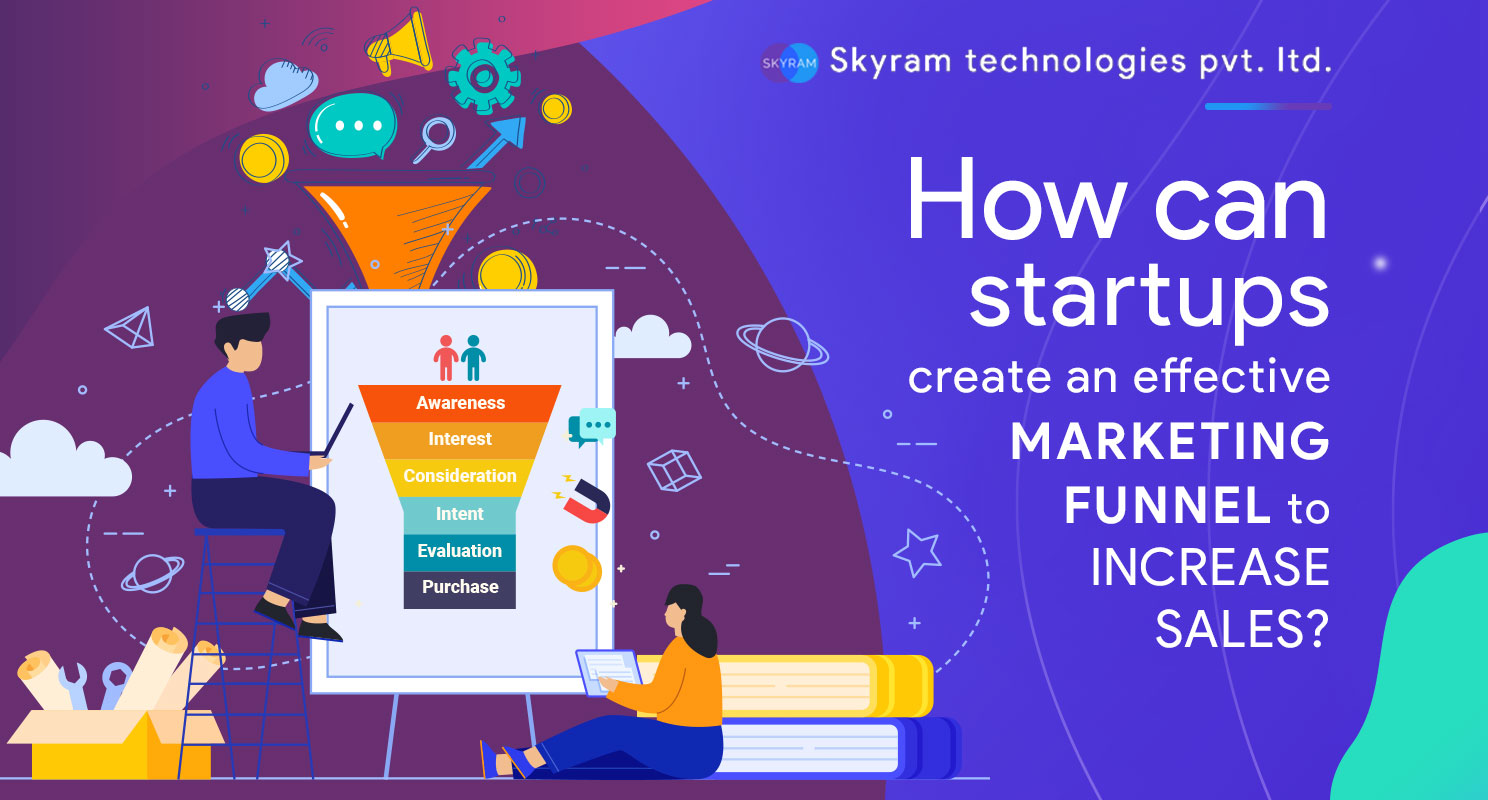
How can startups create an effective marketing funnel to increase sales?

Every business wants their sales process to run smoothly. To make sure that happens, it is imperative for every business to create an effective marketing funnel. The right marketing funnel will help in converting a visitor into a paying customer.

A lot of business owners are drifting away from the “marketing funnel”. It is a misconception to think that marketing funnel is way too mechanical. The funnel is a simple way to describe the lead nurturing sequence, to shift customers from awareness to purchase.

It is a useful way to describe a complicated process that offers startups and marketers with a good visual image. In this blog, we are going to breakdown the different steps to create an effective marketing funnel to boost your sales.

What is a marketing funnel?

A marketing funnel is a way to breakdown the customer journey all the way from the “awareness” stage to the “purchase” stage. The funnels can also include certain post-purchase steps that help in customer retention.

It is a compilation of all the steps that a buyer needs to go through before purchasing. There is no denying the fact that people buy all kinds of stuff at all times, whether they need it or not.

One of the primary reasons people buy stuff that they don’t need is because the top brands understand the consumer journey. Not only that, they know how to instigate demand among customers and guide them to buy something they don’t need.

What are the different types of marketing funnel models?

There are primarily four different types of marketing funnel models. They are as follows:

AIDA Funnel: This is also known as Awareness, Interest, Desire, and Action funnel. It was developed in the late 19th century. It is the most popular and most preferred marketing funnel that comes in four stages including awareness, interest, desire, and action.

The AIDA Model
The AIDA Model

This marketing funnel identifies the varying cognitive stages of an individual while buying a product or a service. It is more of a communications model that enables companies to see opportunities on how and when to communicate during each stage since consumers use different platforms these days.

Inbound marketing flywheel: The inbound marketing funnel is focused on three specific stages, attract, engage, and delight. This method of marketing funnel focuses on developing relationships with the target audience. In this way, you increase credibility and trustworthiness. The inbound marketing flywheel is a great way to get your target audience to look more closely at the products and services.

Conversion funnel: The conversion funnel is a much more open-ended than the first three because it enhances the delight stage. Thus, it transforms the repeat customers to brand advocates and it brings referrals to the business.

Growth funnel: The growth funnel recently became one of the very popular marketing funnels that are used by startups. It is used by Airbnb, Uber, Dropbox, and other premium startups. It is also known as the pirate funnel because it comprises five stages including, acquisition, activation, retention, referrals, and revenue.

The Growth Model
The Growth Model

If you want to capture leads at every stage of the marketing funnel, it is imperative to assign action at every step. Here are the following steps to create an effective marketing funnel for startups.

Steps to create an effective marketing funnel for startups

1. Awareness: Getting the message out in the open

This is stage one of a marketing funnel for startups. It is important for your brand to get discovered by the right people. Here you have to make sure that you target the relevant audiences to bring traffic to your website who will buy your offer.

You can create awareness through SEO using high-ranking keywords and interesting content for your audience. You can reference the product or service in some way or subtly promote the requirement for something like them in content. Keep the sales talk to a minimum.

You can also build awareness with paid advertising. There are other low-intent keywords triggering Google Search. This is also a chance to increase awareness. It is a bit advanced PPC technique where you should have a paid search strategy and solid lead nurturing system in place.

Also, sometimes, low-intent traffic might not click n your ad. Thus, keep an eye on the metrics. Despite the risks, using a low-intent keyword in Google Ads is a good way. It will get your brand seen at the early stage of a consumer journey.

Also, using social media platforms like Facebook, Twitter, Instagram, LinkedIn and more is a great way to build brand awareness.

2. Consideration: Establishing yourself as the most compelling option

This is the stage where you target people that show clear intent or desire to buy. It can be now or in the near future. The key to a successful remarketing strategy is to segment your campaign and target specific user interests.

Depending on the analytics setup, you can track specific user actions. Then create segmented remarketing lists with a specific message for every segment of audience. The actions indicate the extent of the user’s awareness and interest.

You can use this to create relevant campaigns for audiences. Use this similar tactic to target the leads at all stages of the marketing funnel. Also, capture email leads through email marketing for lead nurturing. Create email marketing campaigns to build an email list and get users to sign up.

3. Conversion: Turning leads into customers

The marketing goal is to convert leads, reduce conversion barriers, and turn consideration into action. Purchases are the most valuable types of conversions but there are others whom you can target with different campaigns. These include email signups, content downloads, free trials, account creations, demos, and more.

Creating organic and paid searches, SEO strategies, and Google Ad campaigns are the basics of conversion. Along with that, focus on optimizing the forms to maximize conversion. For every conversion, the user needs to complete a form. Thus, optimizing the form is important for conversions.

Next is, do the CRO in a smart way. There are 9 simple conversion rate optimization (CRO) fixes that influence conversion. These include lesser load times, single-column layouts, using ‘magic number’ technique, using ‘inverted pyramids’ for CTA’s, multi-step firms, remove the navigation from landing pages, testing the best CTA placement, testing secondary CTA’s, and exit-intent popups.

The attention should be on increasing incentives and removing barriers. Start with the most important aspect of the key pages and get them in order.

4. Loyalty: Turning customers into repeat buyers

The primary objective of a marketing funnel doesn’t end with a single purchase. That is just the beginning. You have to make your existing customers keep buying. Make sure that customer service is a top priority.

Regardless of how good your product/service is, customers will face problems of some kind. How you deal with your customers will become a major factor in customer retention. Create online guides, FAQ’s, Chatbots, contact management, and CRMs to help customers have the best experience.

This helps in filtering out cases. The most important aspect is to offer in-person support when needed. The support team should be ready to come in. it can be tricky if you have a large customer base but that is where a good CRM comes in.

Try to reward customers for their ongoing purchase. It works as an incentive, increases loyalty, and m0tivation to come back and buy more.

5. Advocacy: Availing new leads from existing customers

The final step is to turn happy customers into lead generators. How? Happy customers will continue to buy from you but they will also recommend you to others. 83% of the buyers state that recommendations from friends and family play a vital role in their purchasing decisions.

When you have a number of satisfied customers, create a profile of positive reviews. Also, get positive service stories or testimonials from your customers. Create referral campaigns by asking your customers to invite more of their friends and offering them incentives in doing so.

These are the steps that a startup needs to implement an effective marketing funnel. Are you looking to create an impeccable marketing funnel for your business? Get in touch with the certified professionals at Skyram Technologies here.

For more informative blogs, have a look at our blogs section here.

Digital Marketers Newest Tool- Facebook & Instagram Stories

Social media brought a whole new world for marketing when it was first introduced in the digital market. In recent times, however, with Facebook & Instagram stories, it changed the way we use social media.

Initially, these features were added to mimic the Snapchat feature but Instagram is constantly adding new features which are creating huge opportunities for marketers.

Why Facebook & Instagram Stories Are So Popular?

Facebook & Instagram stories are basically small videos that can be used for ads, promotions, generate awareness & so on. They are interactive, engaging which can immerse the audience with its multisensory appeal.

Moreover, these kinds of promotions are cost-effective & super simple to use. Literally anybody, who is familiar with social media can use them without any hassles. They have the potential to reach thousands & thousands of people within a very short span of time.

How Do Facebook & Instagram Stories Work?

Let’s give you an example. Now, Virat Kohli is the brand ambassador for Manyavar, a men’s ethnic brand. So, when he posts about the brand on his Instagram stories, the brand is targeting his massive followers. Also, when Manyavar is posting their ads on Facebook or Instagram stories, you see the face of our Indian Cricket Team Captain.

This type of promotion costs half the price of offline marketing. With social media influencers, they earn millions with just digital promotions. People are most invested in short comprehensive stories.

Instagram and facebook stories

Benefits of Facebook & Instagram Stories

• Audience Engagement: The audience is whimsical in nature. These stories are the first thing audiences see when they visit their profile. They are great to grab their attention compelling them to scroll more.
• Better Connection: These stories are so popular because they combine forms of communications: video & storytelling. It is more real & they create an instant connection.
• Cost-effective & Faster: This form of marketing costs much less than traditional ones. They are faster, quicker & more comprehensive.

Few Essentials To For Better Use Of Facebook & Instagram Stories

Here are a few tips to help you create a more compelling story for promotions:

• Connect with Your Audience– Create a real-time story. Get personal & try to actually “tell a story” rather than “selling your product.” Brands often use behind-scene-footage to create more personal bonds.
• Stickers & Hashtags– These create more visibility & increase more viewers. Brands often own hashtags to create a collection of stories.
• Add links– Add relevant links for the users to get to the product easily.
When compared, it is usually seen that Instagram stories are mostly used for influencer marketing. For instance, we see our favourite Youtubers or stars like Deepika Padukon endorsing Epigamia.
Bigger brands use Facebook stories a lot more. Brands like Reebok often run stories about their new launch on their Facebook handle. However, there is absolutely no rule. You choose your platform.

Influencer marketing

Although this type of promotion is user-friendly, it can often be misguided or incomplete. It is better to get some expert help who can create strategic marketing for you! Contact our team at Skyram Technologies for detailed Digital Marketing Strategies, Content Management, Web Development, Social Media Marketing to help you with brand promotions. Connect with us here!