India Tightens Regulations on Social Media, Digital Platforms & Streaming Services

India launched a new set of rules to regulate social media content, streaming services, and digital news content. The new set of rules will bring all these elements under the purview of “government supervision”. Social media organizations will now have to keep a track of the “first originator” of any piece of information under specific circumstances. On the other hand, the online streaming platforms and digital marketing agencies will resolve the grievances while considering a “Code of Ethics”.

The Ministry of Electronics and Information Technology issued ‘Guidelines for Intermediaries and Digital Media Ethics Code after a press conference held by Law & Justice Minister Ravi Shankar Prasad and Information & Broadcasting Minister Prakash Javadekar. According to the Union Ministers, the new Information Technology Rules 2021, are meant to tackle the consistent abuse of social media and OTT platforms. Also, to stop spreading false news.

The changes might be the largest shake-up in the technology regulation space in a decade. The new Information Technology Rules 2021 might also supersede some segments of Information Technology Rules of 2021. Social media companies will need to take down unlawful content within a certain time-frame after they are served with a notice or a court order by a government agency. The new rule also includes an additional segment for sexual content.

According to the guidelines, any offending content or graphic that, “exposes the private areas of individuals, show such individuals in full or partial nudity or in a sexual act or is in the nature of impersonation including morphed images” – have to be removed by the intermediary within 24 hours.

Originator of Mischief

As we mentioned, the social media platforms like Facebook, WhatsApp, and Twitter will have to share details of the origin of a certain post or a tweet or a message if asked by a court or a governing authority. This will only be related to the sovereignty and integrity of the country, the security of India, relations with foreign states, public order, rape, or any other sexually explicit content.

According to Ravi Shankar Prasad, the social media platforms will have to disclose who started the mischief or who is the first originator of the message or tweet. In case the message originates from outside India, then the platforms have to share details about who was the first to share it in the country. Thus, the new rule could mean the one-to-one messaging platforms might have to break the end-to-end encryption code in India.

An Inter-Departmental Committee

There will be an inter-departmental committee comprising of representatives from the Ministry of Women and Child Development, Ministry of Information and Broadcasting, Ministry of Home Affairs, Ministry of Law & Justice, Ministry of External Affairs, Ministry of Electronics & Information Technology, Ministry of Defense & also the Indian Computer Emergency Response Team.

This committee will have ‘Suo-Motu powers’ to call hearings based on different complaints of violation of the code of ethics. The committee will have the power to censure, warn, reprimand, admonish violators, seek an apology, and take other actions. Also, the government will assign an officer, identical to the rank of a joint secretary or above. The assigned officer will be the “Authorized Officer” who will direct the blocking of content considering the new guidelines.

The Redressal Mechanism

According to the new Information Technology Rules, social media companies will also appoint a chief compliance officer to co-ordinate law enforcement. There will also be a “grievance redressal officer”. All of them have to be residing Indian citizens only.

As stated by Ravi Shankar Prasad, “Social media platforms have to set up a grievance redressal mechanism. This involves the shooting of complaints in 24 hours, redressal within 15 days. They also have to submit a monthly compliance report to the government.”

Also, the social media companies have to comply and assist in investigations or any other cyber-security-related issues within 72 hours of the request. The companies will have to keep a provision for the voluntary verification of the users. The Union Minister mentioned, “If you seek to disable access to the content of any social media user, you are required to give him reasons and also hear him”.

According to Ravi Shankar Prasad, the new rules will “empower the ordinary social media users”. He said, “The government welcomes criticism and right to dissent, and social media has been used to ask questions too. But it is very important that the users of social media may be given a forum for the resolution of their grievances against the misuse and abuse of social media.”

OTT Platforms

The government has also planned for a grievance redressal system for the OTT platforms and the digital portals. Under the new rules, OTT platforms like Amazon Prime and Netflix will have to set up a mechanism to address any sort of grievances. Similar to the censor boards of the films, the OTT platforms will have to categorize their movies based on age. They have to list detailed classification of content depending on violence, age, sex, and nudity.

The rules will also enforce the streaming services to submit to the authority of a specific appeals body. It will be headed by a retired High-Court or a Supreme Court Justice. If this committee believes that any streaming content violates the law, it can send the content to the government-controlled committee to issue blocking orders.

Digital News Platforms

The new rules can also regulate news media platforms using a proxy. The Information Technology Rules of 2021 have a specific, “Code of Ethics and Procedure and Safeguards in Relation to Digital/Online Media”. This is applicable only to specific entities.

These ‘specific entities’ include “news and current affairs publishers” and also intermediaries that are related to the transmission of trending news content, online content publishers, and also the intermediaries that enable online curated content transmission.

This basically means every news website in India. Also, the rules lay down a three-tier structure to make sure the new regulations are followed. This includes self-regulation, regulation by the “self-regulating” bodies, and also “oversight by the central government”.

India is the largest market for both WhatsApp and Facebook users. According to Facebook, it welcomes the regulations that share ways to address different challenges on the web. Facebook stated, “The details of rules like these matters and we will carefully study the new rules.”

Also, according to a Twitter spokesperson, the company will study the new regulations. It is looking forward to keeping the continued engagement with the Indian government. “We believe that regulation is beneficial when it safeguards citizen’s fundamental rights and reinforces online freedoms.” – Twitter

The Risk of Censorship

Major tech conglomerates are coming under tight scrutiny throughout the world. Last week Facebook faced a backlash from a few politicians and publishers because it blocked news feeds in Australia regarding a dispute with the government on revenue-sharing.

Due to this, the Australian Government passed a law to make sure Facebook and Google pay media companies for the content. This is a step that both Canada and Britain want to follow.

The online news in India will be regulated maintaining the new rules from the Ministry of Information & Broadcasting. The new rules will also bring concerns related to the freedom of speech.

Apar Gupta, the Executive Director of the Internet Freedom Foundation, said, “To fix the problems in these sectors the government has adopted an approach which carries the risks of political control and censorship”.

According to the Information & Broadcast Minister Prakash Javadekar, “Media freedom is absolute but with responsible and reasonable restrictions. Self-restriction is called responsible freedom.”

The Three-Tier Structure

The publishers of content and news on different digital platforms will have to follow the “Norms of Journalistic Conduct of the Press Council of India and also the Programme Code under the Cable Television Networks Regulations Act”. According to the government, the new rules are necessary to “level playing field between the offline (Print, TV) and digital media”.

To make sure the “Code of Ethics” is adhered to by the digital media, the government will create a three-tier structure to address the user grievances.

  • The first level will be self-regulation where a grievance redressal officer will be appointed by the applicable entity. The officer will make the decision on every complaint registered.
  • The second is the self-regulation from the self-regulating authorities of the applicable entity.
  • The final stage will be the monitoring of the central government.

The rules will bring a strict oversight mechanism of the government, involving different ministries and also a code of ethics that bans the content which hampers the integrity and sovereignty of India or threatens the national security.

Budget 2021 Highlights: The Key Facts from the Union Budget 2021-22

As we all are aware that the Union Budget 2021 was declared yesterday. The Union Budget 2021 came up at a time when the Indian economy is reeling from the aftereffects of the COVID-19 crisis. Considering the backdrop of the farmers’ protest, there were a lot of expectations that Budget 2021 would consider the agriculture industry. There was a lot of talk about increasing the funding for the PM Kisan Yojana as well.

During her speech, our finance minister Nirmala Sitaraman declared the allotted amounts on different industrial sectors. An important aspect of Budget 2021 is this is the first paperless budget in the history of India. In short, the Government has allotted Rs. 2 crores for the healthcare sector, 35,000 crores on the COVID-19 vaccine, Rs. 1.10 lakh crore for the railways, and aims to complete 11,000 km of National Highway Infrastructure.

Apart from that, India has already approved two COVID vaccines – the Covaxin and Covishield. Soon, two more vaccines shall be launched. The good news is India has already initialized the nation-wide vaccination program. This is the largest in the world. The Budget 2021 also includes a new Aatmanirbhar Swstha Bharat Health Program of 64,180 crores. The intention is to reduce the use of single-use plastic, reduce air pollution and segregate the waste. This will come as an addition to the present National Health Mission.

The following are the 6 main pillars of the Union Budget 2021:

  • Health & Well-Being
  • Development of Aspirational India
  • Innovation and R&D
  • Improvement of Physical, Financial Capital, and Infrastructure
  • India as a Human Capital
  • Minimum Government & Maximum Governance

In the following section of the blog, we will share the key highlights of the Union Budget 2021-22.

Mission Poshan 2.0

The government will launch Mission Poshan 2.0, the Jal Jeevan Mission Urban. They will also deploy the Urban Swachh Bharat Scheme. The Budget 2021 includes Rs 1.4 lakh crore for this scheme.

The New Vehicle Scrapping Policy

The government launched a new vehicle scrapping policy. It is a voluntary scrapping policy where the outdated/unfit vehicles will be removed from the streets. The passenger vehicles which are beyond 20 years and also commercial vehicles which are beyond 15 years need to go through a vehicle fitness test.

Rs. 95,000 crore allotted for Road Development in Bengal

Finance Minister Nirmala Sitharaman announced that Rs. 95,000 crores has been allocated for the development of roads in Bengal. There is a lot of talks that this will have an impact on the upcoming election in 2021 in Bengal.

11,000 kms of National Highway Infrastructure

The government is aiming to complete 11,000 km of national highway infrastructure in 2021. Tamil Nadu will get a corridor of 3,500 km, Kerala gets 1,100 km, and also an investment of Rs. 65,000 crore. West Bengal will get 675 km which will also cost Rs. 95,000 crores. Assam has been promised 1,300 km in the next three years.

Indian Railways gets Rs. 1.10 Lakh Crore

Our Finance Minister mentioned that the Indian Railways will have Rs. 1010 lakh crore for infrastructure development. Rs. 1.7 lakh crore is the capital expenditure for the allotment. Also, she announced the central fiscal funding for Bangalore Metro, Kochi Metro, Chennai Metro, Nagpur Metro, and Nasik Metro projects throughout the nation.

The Power Sector gets Rs. 3.05 lakh crore

Rs. 3.05 lakh crore is allocated to the power sector of India. Finance Minister also said that Budget 2021 includes 100 more cities in the gas distribution network in the next three years.

Gas Pipeline Project in Jammu & Kashmir

Finance Minister announced a brand new gas pipeline project for developing Jammu & Kashmir.

Rs. 20,000 crore is alloted for the Public Sector Banks and the Launch of LIC IPO

The Public Sector Banks will have an additional amount of Rs. 20,000 crore funding. Also, the government is planning to sell a part of the holding from the Life Insurance Corporation of India (LIC) through an initial public offering (IPO) in 2021. There will also be an amendment of the present act to ease out the public offer.

Government commits to the Farmers Welfare

This is one of the most expected elements of the Union Budget 2021 because of the ongoing farmers’ protest. According to Finance Minister Nirmala Sitharaman, “the government is committed to the welfare of the farmers”. Also, the MSP has been changed. More than 75,000 crores were paid to the wheat farmers in 2020-21. 43.36 lakh farmers benefitted from this.

Ujjwala Scheme

The government is also extending its helping hand to the Ujjwala scheme for an additional 1 crore people. The Ujjwala scheme offers LPG connections along with a financial subsidy from the central government. Thus, this scheme already benefits more than 12 crore households right now. Also, this benefit will be given to offering a clean and cheap cooking fuel.

Agriculture Fund Credited with Rs. 16.5 lakh crore

The GOI has also proposed an increase in the agriculture credit with a target of 16.5 lakh crore. With the change in the MSP regime, the assured price is at least 1.5 times the production cost throughout all commodities. The overall amount paid to the paddy farmers is Rs. 1.72 lakh crore in 2020-21.

Disinvest Target at Rs. 1.75 Lakh Crore for FY2022

According to our Finance Minister, the disinvestment receipt is at Rs. 1.75 lakh crore for the fiscal year 2021 starting from April 1st. Two public sector banks, one general insurance company will be disinvested. Also, the legislation and amendments will be introduced in this session.

National Education Policy

With the Union Budget 2021, the National Education Policy attained a good reception. More than 15,000 schools will be qualitatively strengthened in the National Education Policy.

1500 Crore Alloted for Promoting Digital Payments

Nirmala Sitharaman also announced that Rs. 1500 crore will be allotted for the promotion of digital payments. Also, an additional amount of Rs. 300 crore is allocated to Goa for celebrating the 60th anniversary of the liberation from Portuguese rule.

Bengal & Assam Tea Workers Alloted with Rs. 1000 crore

The center has created a special scheme for the welfare of women and children in Bengal and Assam. Also, the government allotted Rs. 1000 crore for the tea workers of Bengal and Assam.

Rs. 3768 Crore Allotted for Census

The Finance Minister announced Rs. 3768 for the census. The next census that happens in India will be the first digital census in Indian history.

Tax Exemption for Senior Citizens & Startups

Also, there is an exemption for filing taxes for the elderly. In the 75th year of Independence, the compliance burden on the senior citizens will be reduced. For the senior citizens that only have a pension and interest scheme, the government proposed an exemption of filing of income tax returns.

There are new rules for the removal of double taxation from NRIs. Startups will also get a tax extension in the tax holiday for one more year. Coming to the GST, Sitharaman said that the government is focused to ease out the process. Customs duty on copper scrap will reduce to 2.5%. Also, there will be an increase in the customs duty on auto parts by 15%.

The Budget 2021 also includes “Textile Parks” developed in the next three years. The Railways can also monetize dedicated fright corridor assets for multiple operations and maintenance after commissioning. The center also offered Rs. 18,000 crore for the public buses. Solar Energy Corporation got Rs. 1000 crore and the Renewable Energy Development Department got Rs. 1500 crore.

The GOI will also support the development of a world-class fintech hub at GIFT. The Fiscal deficit estimation was at 9.5% of the GDP for 2020-21. The Fiscal deficit is estimated at 6.8% of the GDP. During her speech, she also proposed a portal for collecting info on gig-workers, construction workers, and builders. They will also enjoy the social security benefits.

Women will also be allowed to work night shifts with proper protection. To increase help towards the unorganized labor force, the GOI will launch a portal for collecting information on gig workers, building, and construction. This will help in formulating health, housing skill, insurance credit and food schemes for the migrant workers.

In Conclusion

According to the economic survey of 2020-21, the Indian economy is seen growing at 11%. However, the GDP growth rate is at minus 7.7% for the current fiscal year. This is the third budget under the NDA government led by PM Narendra Modi. Last year, the Finance Minister used the “Bahi Khaata”, which is also the red handmade ledger book.

Finance Minister Nirmala Sitaraman mentioned that the Budget 2021 is prepared in “unprecedented times”. She also thanked the essential workers who have continued to serve the country during the lockdown. She mentioned that India couldn’t imagine the health crisis that unfolded in 2020 when she presented the budget last year.

The budget proposals will also strengthen the “Sankalp of Aatmanirbhar Bharat”. The focus, this time is on the 6 main pillars. Also, there are 217 projects worth Rs. 1 lakh crore, which will come under the National Infrastructure Pipeline. She also mentioned that she will soon table a bill on the DFI to fill up the gap in the long-term finance for the infrastructure sectors.

Looking Back to 2020! Our Standpoint, Achievements, and Promise

Well, this can be said beyond any shred of doubt, that the year 2020 has been a rollercoaster ride. Be it an individual, a startup, a small business organization, or a well-established corporation, every one of us had to sail through a wave of sudden changes. It felt like the world had paused its natural course.

However, the one thing that we, as humans have learned is to change and adapt with time. And once again, that’s exactly what we saw throughout this year. This time, evolution happened online. We went through a global digital transformation in a very short span of time. The best part is small businesses and startups got a lot more opportunities online.

With the increasing online activity, it became easier for SMEs to reach out to their audience. Branding became easier because people started recognizing numerous SME’s through social media. Just like a coin comes with two sides, similarly, this global lockdown led to an increase in online activities in one way or the other.

Skyram’s Stand in 2020

Despite the COVID-19 pandemic brought the entire world to a standstill, disrupting numerous businesses in India, we at Skyram Technologies have stayed committed to businesses as usual. Yes, it is true that we had to change our outlook and process almost overnight. That, by itself, was a herculean task. However, we were lucky enough to have the support of our expert team of professionals.

At Skyram Technologies, we believe in teamwork and every individual here is a valued resource. With dedicated and consistent help from our resources, it was possible for us to overcome the challenges. Our team members are our backbone. Their support helped us to stay on track and keep going even during the ongoing disruption to our normal lives. We are proud to say that we were able to offer continued and uninterrupted services to our clients.

Our clients rely on us for delivering consistently on time. Therefore, we consider it our duty and obligation to make sure that we live up to their expectations – even during unsettling times like these. Not only we had to cope with the ongoing pandemic, but in Kolkata, we had to face the wrath of Amphan – the super cyclone. That made us re-evaluate our processes and change our plans once more.

Our Achievements in 2020

Keeping in mind the motto of “the show must go on”, Skyram Technologies has achieved quite a few milestones and accolades this year.

  • To begin with, Skyram Technologies was awarded the prestigious ISO 9001:2015 Compliance Certificate on digital marketing, branding, and IT services after a comprehensive audit by Paramount Quality Services. It is one of the most renowned UK-based firms dealing in various Management & Compliance Certifications.
  • Skyram Technologies ranked 3rd among all the digital marketing companies in Kolkata on Crunchbase. Crunchbase is highly recommended, authentic, and one of the best platforms for finding business information regarding private and public companies. It is a truly proud moment for us.
  • Skyram was rated as the top digital marketing company by GoodFirms. Once again, GoodFirms is a renowned source for finding multiple service providers and companies online. Skyram Technologies is a recommended top digital marketing company from GoodFirms. We also specialize in web design and development.
  • A consistent 5-star rating has been another achievement of Skyram Technologies this year. Our commitment to delivering every single client with utmost dedication has led us to achieve 5-star ratings throughout the year.
  • Skyram Technologies partnered and collaborated with Times Internet, MX Player, Cricbuzz, Gaana, and MagicBricks for direct ad placements. Thus, offering more revenue, exposure, and growth to our clients.

Skyram Technologies – Redefining Success with Humility

In a dominantly digital era, a business is as good as its technology and digital solutions. Skyram Technologies strive to deliver unique and impressive digital solutions to every challenge. Looking back at 2020, we consider ourselves fortunate enough that we got to learn quite a lot from this year.

2020 forced us to think, adapt, evolve, and learn to execute in a different way. In the long run, this situation will open up a lot of opportunities and avenues for us as we broaden our horizons. We are pretty sure that these avenues will help us in creating a more diverse and inclusive work environment.

Also, this year 2020 taught us one more thing. Despite all the efforts and plans, we can never be sure of what’s coming up next. However, what we can promise is, no matter what Skyram Technologies will continue to evolve, adapt, and find better ways to serve all our clients in India and abroad at all times. We look forward to offering the best services in the coming years as well. See you soon in 2021 and in more years to come.

WhatsApp Payment Services in India – Everything you need to know

After attaining the go-ahead from the Unified Payments Corporation of India (UPI), WhatsApp rolled out the payment services for 20 million users in India. WhatsApp also announced that it has teamed up with numerous banks like SBI, HDFC, Axis Bank, and ICICI for digital payments in India. As mentioned by the Facebook-owned messaging system, SBI caters to more than 45 crore customers in India. Also, with more than 120 million UPI users, SBI also commands a 28% market share as a Remitter Bank, which is highest in the ecosystem.

When was WhattsApp Pay introduced?

WhatsApp Pay is an in-chat payment feature that helps the users in making transactions to their contacts in WhatsApp. This is a UPI-based payment service that allows the users to both sending and receiving money. This is developed by the National Payments Corporation of India.

Initially, WhatsApp Pay was launched in February 2018. That was a trial run. ICICI Bank partnered with WhatsApp as a medium to transfer payments to a million users. On February 7th, 2020, WhatsApp received clearance from NPCI to roll out the digital payment feature in phases. In the first phase, WhatsApp rolled out the payment services to 10 million users in the country.

How to use WhatsApp Pay?

For using WhatsApp Pay, the users need to send a request to the contact. When they receive the request, the contact can set up the UPI account on WhatsApp. You can send the money directly from the chat. Tap on the “share file” icon and select the “payment” option. The payment option is also available on the shortcut menu.

You can check the transaction history and account details in that section also. The payment system works based on the Unified Payments Interface method, where the fund transfers are initiated without offering bank account numbers and IFSC codes. WhatsApp Pay users can also enter the UPI ID and send money through the QR code. WhatsApp users can send money to people that are not on their contact list as well.

Requirements and key objectives of WhatsApp Pay

To send money using WhatsApp Pay, it is mandatory to have a bank account and a debit card in India. WhatsApp will send instructions to the banks, which are the payment service providers. The banks start the transfer of money through UPI between the sender and the receiver.

In the long run, we believe that the combination of WhatsApp and UPI’s unique architecture will help the local organizations to address some of the major challenges. This will also include rural participation in the digital economy. Also, it can offer financial services to those who have never had access to digital payments before.

According to Facebook CEO Mark Zuckerberg, WhatsApp payments were possible because of the UPI systems and 140 banks. All of these made things easy. During a chat with Reliance Chairman Mukhesh Ambani, Mark Zuckerberg said, “We just launched WhatsApp payments in India last month — now you can send money to your friends and family through WhatsApp, as easily as sending a message. That was possible because of the UPI system that has been built in India.”

Similar to every feature in WhatsApp, the payments system is designed keeping in mind privacy and security. Along with entering a personal UPI PIN for every transaction, WhatsApp Pay is available for users of the latest version of Android and iOS.

What are the controversies related to WhatsApp Pay?

There have been allegations that the payment system might not be a secure option. However, WhatsApp refuted the allegation in the Supreme Court. The allegations originated from a controversy last year. There was a breach of privacy and financial data security. Indian journalists and human rights activists claimed that they were among the ones globally spied upon by unnamed entities.

A serious allegation was submitted against WhatsApp that it can be hacked. While WhatsApp denied the allegations and mentioned that they were absolutely baseless. There was no such pleading and it is just an oral submission across the bar without any basis.

According to senior advocate, Krishnan Venugopal, the problem with WhatsApp, Google and Amazon is they allow payment to happen but the data goes abroad. Companies can access important financial data and RBI justifies it. This is a violation of privacy judgment because the data is grossly misused.

It also offers the opportunity to the companies to collect data and use it for advertisement purposes as well. However, WhatsApp has mentioned that they don’t track the exact location of the users but they do note the IP address for verification purposes.

According to Abhijit Bose, Head of WhatsApp, India, “We’re excited and privileged to partner with State Bank of India, ICICI Bank, HDFC Bank, and Axis Bank to bring simple and secure digital payments to WhatsApp users across India. UPI is a transformative service and we jointly have the opportunity to bring the benefits of our digital economy and financial inclusion to a large number of users who have not had full access to them before.”

Closing statement

Whether the WhatsApp Pay feature will prove to be a secure and safe option or not, is debatable. Even though WhatsApp claims that the payment method is safe for the users, we will have to wait for some time to see how it works out throughout the people of India. Nevertheless, when people access financial tools they are empowered to support themselves and others to start a business. Thus, in the long run, these innovations are important to offer people more control over their money. Making payments easier is a small step that can help.

Reverse Image Search on Search Engines Like Google, Yandex, Bing & Tineye

While searching for anything on Google, our tendency is to search with keywords. What if we need to search something similar to an image we say a few moments ago? This is where the benefit of reverse image search comes in.

The reverse image search feature will let you check Google for the complete list of all the pages where that image appears on the web. In other words, you can search Google using an image.

In this blog today, we are going to share the complete guide on reverse image searches on multiple search engines like Google, Yandex, Bing, and TinEye.

Let’s start with the basics first.

What is reverse image search?

In short, reverse image search is just like a simple Google search, but this time with images. It not only lets you explore the image in-depth but also gives you the details on the image size and where can you get it online.

Why should you choose reverse image search?

A reverse image search is extremely useful and You can use it for the following reasons:

  • Seek interesting facts about a particular image you like.
  • Get to know about the copyright status of the image before using it.
  • Check the copyright violations on the images that you are using already
  • Check out if other people are already using your images

How to perform reverse engine search on major search engines?

How to do Reverse image search on Google (desktop)

Let us show you the reverse image search on Google (desktop).

Firstly, you have to open Google. The reverse image search works on Firefox, Chrome, and Safari.

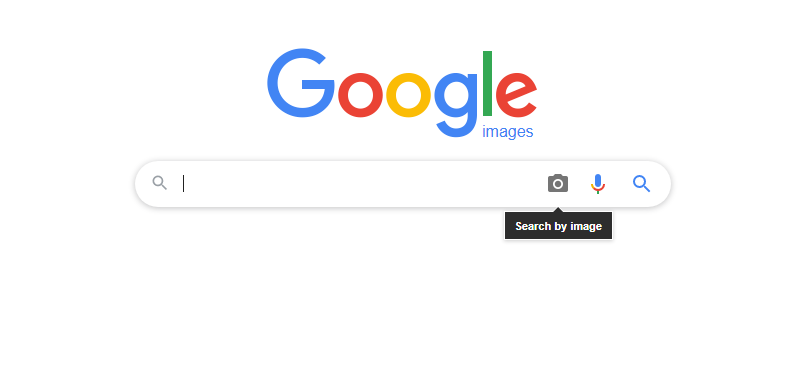
Secondly, open Google images. Go to the right side of the Google search bar and click on the ‘camera’ icon. Upload your image.Google Image Search

However, if you don’t have the image saved, then you can get the URL of an image. Open the Google camera icon once again and paste the URL of the image.

Lastly, click on the search. You will see the uploaded photo along with keywords. Next to the image, Google will tell you whether other sizes of images are available or not.

How to do reverse image search on Google Chrome app on mobile?

Now, let us try reverse image search through the Google Chrome app on mobile. Open Google image search on the Chrome app.

At first, search for your image by typing the image you were looking for. Click enter and a list of photos will appear. Save your desired image.

Now, when you open the image again, long-press it for a few seconds. You will see a drop-down menu with multiple options. One option will be to “search Google for this image”.

image search on Google Chrome app on mobile

Select that option and a new tab will show you where this image is present and its different sizes as well.

How to do reverse image search on Google? (mobile browser)

Open Google images on your web browser. Get rid of the mobile view. To do this, you have to change the website settings to desktop view.

Click the three dots at the end or the top right corner of the browser. Choose the option of “request desktop website”. Now you will see Google as you see it on your computer.image search on Google mobile

image search on Google mobile

Upload an image in the same way you would upload it on your computer. If you have the image saved you can upload it directly and if not then you can paste the URL.

Click on search to explore the results. Google will show you the related searches and also the images available with other sizes. You can check the other websites with the same picture.

How to do reverse image search on Google using iPhone?

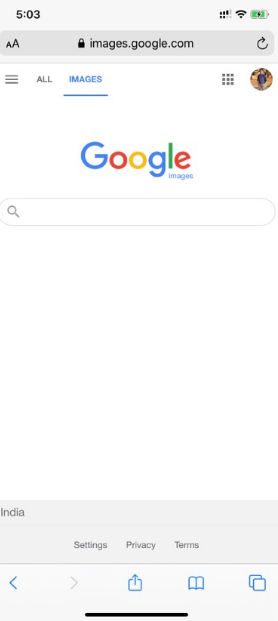
Open the browser and then go to images.google.com. If you are using Safari, click on the ‘AA’ icon on the left.

image search on Google using iPhone

If you are using Chrome, then look at the bottom-right of the screen for the three dots and click on it.

Select “request desktop site” and upload the images in the same way. Click ‘search’ to see the results.

Reverse image search on Bing

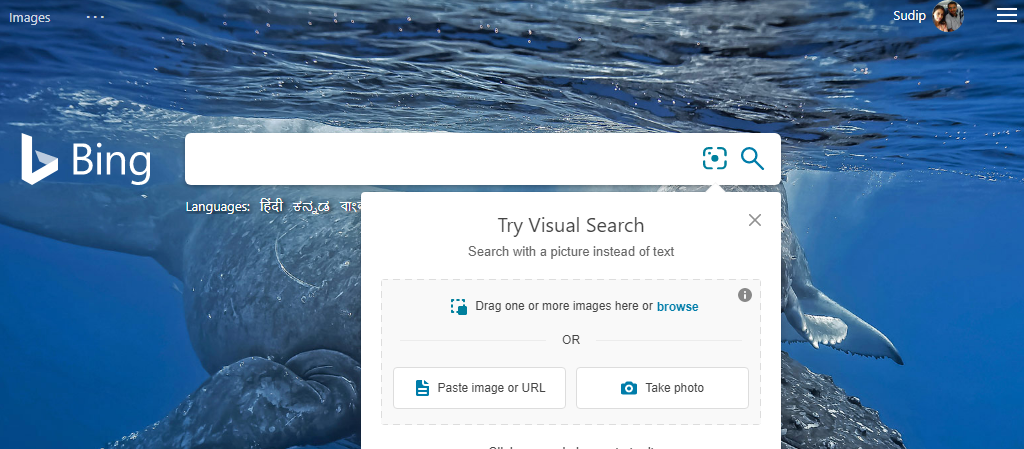
Click on the “images” option on the left-hand side of Bing’s homepage. Choose “search using an image” on the search bar.

image search on Bing

You will get options like drag an image into the search bar, upload images, paste a URL, and take a photo. Unlike Google, in Bing, you can drag more than one image into the search bar.

You can do any of the above-mentioned actions and click on “search”. Click on the tabs to check the pages where the image comes up. You will find similar images and related searches.

How to reverse search for images on Yandex?

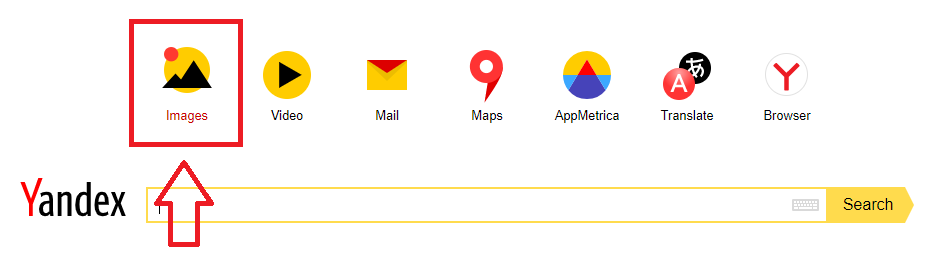
On Yandex, click on the images on the top left corner of the search bar. Then click on the camera icon.

yandex image search

You will have the option to enter the image URL or upload the picture from the desktop. If you decide to save and then upload the images from the desktop, you will find the results with all the available image sizes.

There is a “recognize text” button which will help you in searching or translating the words in the image.

How to perform reverse image search on TinEye?

TinEye is a search engine that offers a quick reverse image search option. Click on the upload button on the left side of the search bar to browse from the desktop’s saved images.

You can also paste the image’s URL into the search bar. You can also drag & drop the image from the browser tab right into the TinEye homepage.

reverse image search on TinEye

The best part is, you can use a filter to search according to the newest or oldest post, image size, best match, and most changed. You will also have the option to filter by domain to get specific results.

In conclusion, it can be said that the reverse image search is easy to do on any mobile or desktop. Be it Mac or PC, Android or iPhone, you can still reap the benefits of it.

However, sometimes the reverse image searches might not work at one go. As a result, even if you upload the photo on the search bar, you will get zero results.

Such incidents happen because the websites prevent the images from getting indexed. Sometimes the data centers could be slightly out of sync. Thus, some users can find the image with reverse image search while others can’t.

Stay Connected! Facebook Launches New Updates amid Testing Times

Well, there is no denying the fact that Facebook is one of the most preferred tools for digital marketing and social media marketing. Perhaps it is the best example of how a simple social media application can upgrade itself to a social media mogul of the present time.

Whether it is about promoting your brand, promoting e-commerce activities, or connecting with your near and dear ones globally, you cannot really think of something better than Facebook. Amid the COVID19 outbreak, it is tough for a lot of people to stay in touch with their loved ones.

Facebook Updates

Here is where the importance of Facebook updates comes in. Facebook has recently updated its messaging platform (aka Messenger) and WhatsApp to help people stay in touch. Mark Zuckerberg announced that the Facebook team has been working relentlessly during the quarantine to finish the COVID19 projects successfully.

Why the sudden need for Facebook updates?

The pretty much obvious reason is to help us stay connected amid the COVID19 pandemic. With the updates, it will become easy for you to connect with more people than before. How? We shall share the details in the following section of the blog.

Apart from staying connected, Facebook updates will also help in improving digital marketing, social media marketing, and e-commerce aspects. Whether it is digital marketing, social media marketing, or e-commerce options, the more people you can connect with, the better it is.

Let's stay connected.
Let’s stay connected.

Also, one more objective behind the updates is to spread genuine news about the COVID19 pandemic and limiting the spread of fake news. The “COVID19 information center” is a feature added by Facebook that will offer the correct information from health officials and doctors.

What are Facebook updates?

Let us share the details on Facebook Updates.

Update 1: Number of participants in the WhatsApp group call will double by next week

Previously, you could add 4 people in a WhatsApp group call. Now, the number of members will be doubled. You can add 8 people in a group call. Facebook is using an AI to enhance the user interface. The change in position will also alter the background of the speaker.

WhatsApp Group Call
WhatsApp Group Call

There were three types of video calling feature available before the updates.

  • One of the most common forms of video calling was the “one-to-one” video calls.
  • The next option was the “video rooms” that are created when a link is made and shared with other people so that they can join the call.
  • The final option is the live video calling for a single person or for multiple people at the same time.

At present, the number of calls through WhatsApp has increased drastically. This is why the increase in the number of members in group calls will be beneficial for people. Zuckerberg also mentioned new Facebook applications coming up as updates.

Update 2: Messenger Rooms – The new video room application by Facebook

The Messenger Room is going to allow the users in creating room for any kind of event or activity. You can create a video call and then send the link to anyone even if they do not have a Facebook or Instagram account.

What are the benefits of the Messenger Room update?

This is a really effective update for digital marketing, social media marketing, and promotional ecommerce events. As stated by Mark Zuckerberg, “It is incredibly easy. You just send a link and that’s it”. At present, you can add 50 people in a video call of a Messenger Room.

Messenger Room
Messenger Room

Chances are the number of people will increase in the future. The best part is you won’t need to schedule ahead of time like the traditional video calls. Instead, you can just click on the “tray” that pops up at the top of your feed.

The “tray” will list the active number of people in the video conference calls. Click on it anytime and you can join in. This new application also comes with private rooms with different levels of openness within groups of your friends’ circle.

You will be able to access the Messenger Rooms in all Facebook applications that include Instagram, Facebook, Portal, and others. If someone doesn’t have Messenger installed, they can get into the Messenger Room from a browser through the link.

The Rooms have become active in most of the countries since Friday (24/04/2020). You can go live on Portal pages and groups.

Update 3: Instagram Live With feature available on computer screens

The new live video feature is also known as “Live With”. This feature was mostly used in the case of major events. Now, you can use this feature for personal online events as well. Here is where you can use Live With feature for social media marketing, digital marketing, and ecommerce.

Who can benefit from Live With feature?

You can connect with a larger audience through the Live With the feature now. This will be significantly beneficial for promoting ecommerce activities by small business owners. Facebook is looking for ways to help its users in hosting events through the live stream.

This is an effective way of social media marketing and digital marketing for emerging startups, especially media and entertainment. The best part is the social media giant is also looking for ways to make it possible for the creators to charge a fee for the viewers to have access to the event.

Facebook Live
Facebook Live!

If the event hosting is accessible with a small amount of money, it will help the creators (media and entertainment) and small business owners in relying on their in-person e-commerce services. The Instagram Live With feature will be accessible in desktop screens too.

As stated by Zuckerberg, “On Instagram, you’re going to be able to engage with live videos, on a bigger screen.” The Live with the feature will also enable Virtual Dates on Facebook Dating and live videos on IGTV.

What is the end result?

The end goal is obviously to stay in touch by any means possible. Wherever we are, Facebook has made it easy to connect with the people we love. It also offers a plethora of opportunities in digital marketing, social media marketing, event hosting, media & news broadcasting, ecommerce, and entertainment.

We, at Skyram Technologies, believe that Facebook updates will have a beneficial impact on multiple small business eCommerce platforms, digital marketing, and social media marketing promotions. What do you think about the updates? Connect with us here and let us know. For more informative blogs, click here.